
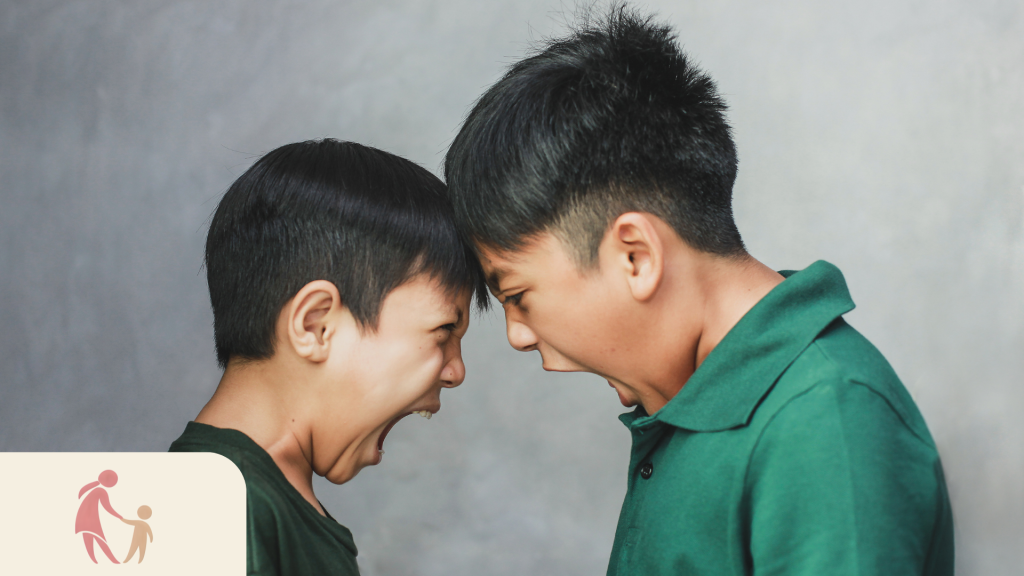
Sibling rivalry can turn an ordinary afternoon into a negotiation over who got the bigger snack, who sat next to a parent first, who touched whose toy, or who was allowed to choose the TV show. One minute, your children are laughing together. Five minutes later, someone is shouting, “That’s not fair!”
For parents, repeated sibling fights can be exhausting. However, conflict between brothers and sisters does not automatically mean their relationship is unhealthy. Siblings are often among a child’s earliest peers, and their interactions can give children regular opportunities to practise sharing, negotiation, emotional regulation, problem-solving, and repair after disagreements. The American Academy of Pediatrics (AAP) notes that sibling relationships can help children learn how to manage conflict, offer support, show respect, and understand differences.
The goal, therefore, is not to create a home where siblings never argue. A more realistic goal is helping children learn how to disagree without hurting each other.
What Is Sibling Rivalry?
Sibling rivalry refers to competition, jealousy, resentment, or conflict between siblings. It can appear in obvious ways, such as arguing or grabbing toys, but it can also be more subtle.
A child might suddenly become clingy when you are helping their sibling. Another may keep score of who received the bigger portion at dinner. An older child may complain that the younger sibling “gets away with everything.”
Common signs include:
- Competing for parental attention
- Comparing toys, privileges, achievements, or praise
- Arguing over personal space or belongings
- Trying to prove who is “better”
- Becoming jealous when a sibling receives attention
- Complaining frequently about fairness
- Teasing, interrupting, or deliberately annoying one another
- Regressing or acting younger after the arrival of a new sibling
These behaviours can be frustrating. Still, many are developmentally understandable.
A toddler may not yet have enough self-control to wait for a toy. A preschooler may struggle to see a situation from another child’s perspective. Meanwhile, an older child may understand fairness but disagree strongly with how their parents define it.
The conflict looks different at each age because the skills behind it are still developing.
Why Sibling Rivalry Happens in the First Place
Children do not usually wake up planning to compete with their brother or sister. Instead, sibling rivalry often grows from several needs and developmental factors happening at the same time.
Children Compete for Parental Attention
A parent’s attention matters deeply to children. Therefore, when one child sees another receiving cuddles, help with homework, praise, or extra time with a parent, they may interpret the moment differently from an adult.
You may think:
“Your brother needs help because he is younger.”
Your child may hear:
“Mum cares about him more.”
This becomes especially noticeable during family transitions, such as the birth of a new baby, starting preschool, illness, or changes in family routines.
Children Care Strongly About Fairness
Children often pay close attention to who gets what. However, fair treatment does not always mean identical treatment.
A seven-year-old may stay awake later than a four-year-old. One child may need more academic support, while another needs more help managing emotions. Different children can reasonably receive different amounts or types of support.
The important part is how children understand those differences.
A 2024 meta-analysis published in Child Development analysed data representing 26,451 children and adolescents. It found that being treated as the less-favoured sibling, as well as larger differences in parental treatment between siblings, was associated with higher levels of internalising and externalising behaviour.
That does not mean parents must treat every child identically. Instead, it suggests that repeated perceptions of favouritism deserve attention.
Temperament and Development Matter
One child may be flexible while another likes routines. One may want constant company while another needs personal space.
Likewise, siblings who are close in age may compete over similar toys, activities, friends, achievements, or privileges. Different personalities can create friction even when everyone has good intentions.
Sibling Rivalry Can Actually Teach Useful Skills
Parents naturally want fighting to stop. Yet some low-level conflict can become a useful learning experience. Imagine two children building with blocks. They both want the same piece.
If a parent immediately decides who gets it, the argument may end faster. However, the children lose an opportunity to practise negotiation.
With some guidance, they might learn to say:
“I’m using it now. You can have it when I’m finished.”
Or:
“Can we find another piece that works?”
The disagreement itself is not the lesson. Learning how to handle the disagreement is.
Research on sibling relationships has repeatedly linked warmth, support, and constructive sibling interactions with aspects of social and emotional development. A 2024 evidence review mapped 277 empirical studies conducted between 1985 and 2022, showing how extensively researchers have examined sibling conflict, warmth, affection, cohesion, power, and conflict management.
Importantly, the researchers also noted a limitation: much of the existing evidence has relied on White, middle-to-upper-income, two-caregiver families. Therefore, findings should be applied thoughtfully rather than assuming every family experiences sibling relationships in exactly the same way.
What Can Make Sibling Rivalry Worse?
Sometimes parents accidentally strengthen the competition they are trying to stop.
Comparing Your Children
Comments such as:
“Why can’t you clean up like your sister?”
or:
“Your brother never complains about this.”
may seem harmless in the moment.
However, comparison can turn a behaviour problem into a competition between children.
Instead, address each child’s behaviour directly.
Try:
“Your toys need to go back in the box before dinner.”
There is no need to bring another sibling into the conversation.
Automatically Finding Someone to Blame
When a fight starts, parents often ask:
“Who started it?”
Sometimes that matters, especially if someone has been hurt. However, turning every disagreement into an investigation can encourage children to focus on proving that the other sibling is guilty.
For ordinary arguments, it can be more useful to describe the problem.
“You both want the same toy.”
Then move towards the next question:
“What can we do about it?”
Demanding an Immediate Apology
A forced “sorry” may end the conversation without repairing anything. A child who is still furious may say the word simply to escape the situation.
Instead, allow emotions to settle first. Then help the child repair what happened by returning an item, rebuilding something they broke, checking whether their sibling is okay, or talking about what they could do differently next time.
7 Practical Ways to Handle Sibling Rivalry
There is no single sentence that will stop sibling conflict forever. However, small changes in how you respond can gradually change the pattern.
1. Stop Unsafe Behaviour First
Children need room to solve minor disagreements, but safety comes first. Step in immediately when there is:
- Hitting
- Kicking
- Biting
- Choking
- Threatening
- Throwing dangerous objects
- Deliberate destruction of belongings
Keep the boundary short and clear.
“I won’t let you hit. You can be angry, but you cannot hurt someone.”
The AAP similarly recommends clear family rules around physical aggression and stepping in when a child’s physical or emotional well-being is at risk.
2. Avoid Becoming the Permanent Referee
If every minor disagreement ends with a parent deciding the winner, children may rely on you rather than developing their own conflict-management skills. When the situation is safe, pause before stepping in.
You might ask:
“What happened?”
“What does each of you need?”
“Can either of you think of a solution?”
You are still available, but you are coaching rather than controlling the entire interaction.
3. Name the Problem Without Choosing a Side
Instead of:
“You always take things from your brother.”
Try:
“You both want the same truck, and neither of you wants to wait.”
This shifts attention away from who is the “bad child” and towards the problem that needs solving.
4. Teach the Words Children Need
Children often act out feelings they cannot explain clearly. Give them useful language:
- “I’m still using that.”
- “Please stop.”
- “Can I have a turn after you?”
- “I need some space.”
- “I’m angry because…”
- “Can you help me?”
These phrases may feel basic to adults. For young children, however, they are social tools that require practice.
5. Think “Fair,” Not Always “Equal”
Different children need different things. Instead of trying to make every situation identical, explain your reasoning when appropriate.
“Your sister has an earlier bedtime because she is younger. When you were her age, you had the same bedtime.”
Clear explanations can help children understand that differences do not automatically mean favouritism.
6. Give Each Child Individual Attention
Children who feel secure in their relationship with you may have less reason to compete constantly for your attention. Individual time does not need to mean an expensive outing.
It could be:
- Reading together before bed
- Taking a short walk
- Cooking something together
- Talking during the drive home
- Playing a quick game
- Letting one child help with a household task
The AAP recommends one-on-one time because it gives children space to feel heard and valued without competing with their siblings.
7. Create Opportunities to Cooperate
If siblings mostly interact when they are competing, competition can easily become their default pattern.
Give them reasons to work together instead. They could:
- Build something together
- Complete a puzzle
- Prepare a snack
- Create a pretend shop
- Make a blanket fort
- Work on a scavenger hunt
- Play cooperative board games
The AAP specifically suggests teamwork-based games for families dealing with sibling rivalry because shared goals can shift siblings from opponents to partners.
When Is Sibling Rivalry More Than Normal Fighting?
Sibling disagreements are common. Still, parents should not dismiss every aggressive interaction as “kids being kids.”
There is an important difference between occasional conflict and repeated intimidation.
| Typical Sibling Conflict | More Concerning Pattern |
| Both children sometimes start arguments | One child is almost always targeted |
| Power is relatively balanced | One sibling consistently has more power |
| Arguments are occasional | Aggression is frequent or escalating |
| Children can reconnect afterwards | One child regularly avoids or fears the other |
| Conflict involves everyday disagreements | Behaviour involves humiliation, threats, coercion, or deliberate harm |
| Both children feel safe at home | A child says they do not feel safe |
This distinction matters.
A longitudinal study involving 17,157 young people found that sibling bullying during adolescence was associated with poorer mental-health outcomes later in adolescence, particularly when victimisation increased over time.
So, while ordinary sibling rivalry can be part of growing up, persistent bullying, intimidation, or physical aggression should not be treated as harmless.
If one child appears frightened, repeatedly injured, extremely distressed, withdrawn, or unable to feel safe around a sibling, consider discussing the situation with a paediatrician, counsellor, psychologist, or other qualified child-development professional.
Your Response Matters More Than Winning Every Argument
There will probably never be a household where siblings agree all the time.
Nor does there need to be.
Children are still learning how to share space, cope with jealousy, tolerate disappointment, communicate boundaries, and understand other people’s perspectives.
Parents can support that learning by keeping boundaries clear while resisting the urge to solve every small disagreement immediately.
Meanwhile, children also learn from how adults handle conflict. The AAP highlights that children watch how parents disagree, manage frustration, and reconcile afterwards.
In other words, your children are learning about conflict even when you are not directly teaching them.
Final Thoughts
Sibling rivalry does not automatically signal a bad sibling relationship or poor parenting. In many families, arguing, competing, and complaining about fairness appear alongside affection, teamwork, laughter, and genuine closeness.
What matters is the pattern.
Give your children space to solve manageable disagreements, but step in when safety or emotional well-being is at risk. Avoid comparisons, explain differences in rules when children notice them, create individual time with each child, and teach the language they need to negotiate.
Most importantly, remember that the goal is not to raise siblings who never fight.
The goal is to help children learn how to disagree, calm down, repair relationships, and eventually handle conflict without needing you to referee every round.
Those skills can reach far beyond the relationship between siblings.