
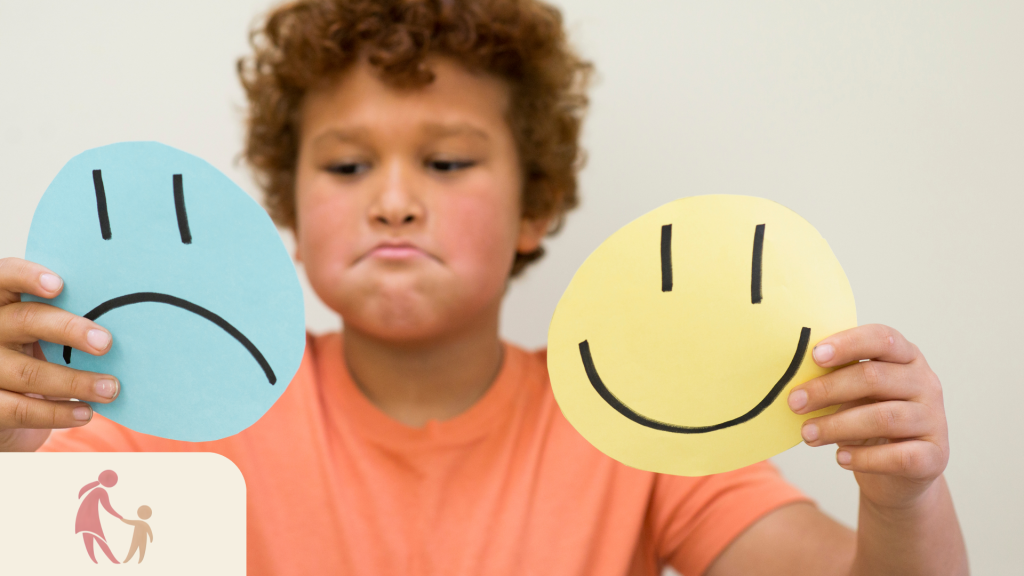
A toy breaks. A sibling takes the “wrong” cup. Homework suddenly feels impossible. Then, within seconds, your child is crying, shouting, throwing something, or refusing to talk.
From an adult’s point of view, the trigger may seem small. For a child, however, the feeling behind it can be very real.
Children are not born knowing how to handle frustration, disappointment, anger, fear, or excitement. These skills develop gradually through experience, practice, and support from the adults around them.
That is where emotional regulation comes in.
Emotional regulation is not about teaching children to stop feeling upset. Instead, it helps them recognise what they are feeling, manage the intensity of that emotion, and choose a safer or more helpful response.
Research also suggests that these skills are connected with other areas of child development. A 2024 longitudinal study involving 852 children aged 6 to 14 found that improvements in emotion regulation predicted later improvements in executive functioning, which includes skills such as attention, planning, and impulse control.
So, rather than expecting children to “calm down” on command, parents can help them build the skills that make calming down possible.
What Is Emotional Regulation in Children?
Emotional regulation refers to a child’s developing ability to notice, understand, express, and manage emotional reactions in ways that fit the situation.
For example, emotional regulation does not mean that your child never becomes angry.
An emotionally regulated child may still feel very angry after losing a game. However, over time, they may learn to say, “I’m really angry,” step away for a moment, take a few breaths, and return when they feel ready.
A child who is still developing this skill may respond by screaming, throwing the game pieces, hitting someone, or shutting down completely.
Neither response means that the child is “good” or “bad.” It shows that their regulation skills are at different stages of development.
Children also develop these abilities gradually.
Harvard’s Center on the Developing Child explains that self-regulation and executive function develop over many years. Young children often rely heavily on adults, while older children become increasingly able to manage thoughts, attention, impulses, and reactions independently.
Why Emotional Regulation for Kids Matters
Learning how to handle emotions affects far more than tantrums. Emotional regulation supports the way children respond to frustration, relationships, learning, conflict, disappointment, and everyday stress.
A child who can recognise that they are becoming frustrated may be better able to pause before hitting a sibling. Likewise, a child who can identify nervousness may find it easier to ask a teacher for help rather than avoiding an activity completely.
These abilities can also support:
- attention and learning
- problem-solving
- impulse control
- friendships
- communication
- coping with disappointment
- adapting to change
- recovering after stressful moments
Research supports the connection between emotional development and the way parents respond to emotions.
A 2023 systematic review and meta-analysis examined 15 randomised controlled trials of parenting interventions focused on emotion socialisation for children aged approximately 18 months to 6 years. The researchers found improvements in parenting practices as well as children’s emotional competence and behavioural adjustment.
However, that does not mean parents need a perfect response every time. Children learn emotional skills through repeated experiences, not one flawless parenting moment.
Why Young Children Struggle With Big Feelings
Imagine asking a four-year-old to use a skill that is still under construction. That is essentially what happens during many emotional outbursts.
Young children are still developing the brain systems involved in impulse control, flexible thinking, attention, and self-regulation. Therefore, knowing what they should do and actually being able to do it while upset are two different things.
A child may know that hitting is not allowed. Yet when frustration becomes intense, their ability to pause and apply that rule may temporarily drop.
This is also why long explanations often fail during the peak of a meltdown. A highly upset child may not be ready to process a lecture about behaviour, consequences, or responsibility.
Connection and calming usually need to come first. Teaching can follow afterwards.
Co-Regulation Comes Before Self-Regulation
One of the most helpful concepts for parents is co-regulation.
Co-regulation happens when an adult helps a child manage an emotional state before the child can do it fully on their own.
The American Academy of Pediatrics describes co-regulation as the process in which caregivers help children manage emotions and regulate behaviour. Over time, these supported experiences contribute to the development of independent self-regulation.
Think of it as temporary scaffolding.
At first, you may provide most of the support.
You might sit nearby, lower your voice, help your child name the feeling, and suggest what they can do next.
Later, your child may need less help.
Eventually, they may recognise the feeling and use a coping strategy independently.
The goal is not dependence on a parent. Instead, repeated co-regulation gives children a model they can gradually internalise.
9 Ways to Teach Emotional Regulation Skills
There is no single technique that works for every child. Temperament, age, language skills, development, environment, and the situation itself all matter.
Still, several approaches can help children practise emotional regulation in everyday life.
1. Help Your Child Name the Feeling
Children have an easier time talking about emotions when they have words for them. Start with simple labels such as:
Happy, sad, angry, scared, worried and excited.
Then gradually add more specific words:
Frustrated, disappointed, embarrassed, jealous, nervous, lonely, overwhelmed and proud.
Instead of immediately correcting behaviour, you might say:
“You look frustrated because the tower keeps falling.”
Or:
“You really wanted another turn. You seem disappointed.”
You are not agreeing with every behaviour. You are helping your child understand what is happening internally.
Research on emotion-focused parenting has found positive associations between parents talking about, modelling, and responding to emotions and children’s developing emotional skills, although the researchers note that individual effect sizes tend to be small and the evidence varies across studies.
2. Validate the Emotion Without Accepting Every Behaviour
Emotions and behaviours are different things. Your child can be angry. They still cannot hit someone. Your child can feel disappointed. They still cannot throw a toy across the room. A useful response combines empathy with a clear boundary:
“I know you’re angry that playtime is finished. It’s okay to feel angry. It’s not okay to hit me.”
This teaches two messages at once:
Your emotion is allowed. Your behaviour still has limits.
That distinction matters because children need to learn that difficult emotions are manageable rather than dangerous or unacceptable.
3. Stay Calm Before Trying to Make Them Calm
Children pay close attention to how adults handle stress. If your child’s shouting immediately leads to your shouting, the situation often becomes more intense.
Instead, regulate yourself first when possible. Slow your speech. Lower your voice. Pause before responding. You can even describe what you are doing:
“I’m getting frustrated too, so I’m going to take a breath before we talk.”
This gives your child a real example of regulation rather than only an instruction.
A meta-analysis covering 53 studies found links between parents’ own emotion-regulation abilities, their parenting behaviour, and child adjustment. Parents who managed their own emotions more effectively also tended to show more supportive parenting patterns.
That does not mean parents must always remain perfectly calm. Repairing after you lose your temper can also teach something useful.
You might say:
“I shouted earlier because I was frustrated. I should have spoken more calmly. I’m sorry. Next time I’ll try to pause first.”
4. Create a Small Toolkit of Calming Strategies
“Calm down” tells children the goal.
It does not tell them how to get there. Instead, help your child test several coping strategies.
They might:
- take slow breaths
- drink some water
- squeeze a cushion
- count slowly
- sit in a quieter space
- stretch
- draw what they feel
- listen to music
- ask for a hug
- take a short movement break
Not every strategy will work for every child.
For example, some children respond well to breathing exercises. Others become more irritated when a parent asks them to breathe during a meltdown.
Therefore, practise these strategies when your child is already calm. That makes the skill easier to access later.
5. Use Play to Practise Self-Regulation
Children do not need every emotional lesson to feel like a lesson. Games naturally give them opportunities to practise waiting, changing rules, remembering instructions, handling mistakes, and managing disappointment.
Games such as Simon Says, musical statues, simple board games, pretend play, and turn-taking activities all require some degree of self-control.
Harvard’s Center on the Developing Child notes that play can support working memory, cognitive flexibility, attention, and inhibitory control. Pretend play, in particular, asks children to remember roles and rules while adjusting their behaviour to match the situation.
This means emotional development does not always require a worksheet or formal activity. Sometimes, play itself provides the practice.
6. Talk About the Situation After Everyone Is Calm
The middle of a meltdown is rarely the best time for a detailed lesson. After your child has settled, however, you have an opportunity to reflect. Keep the conversation short and curious.
You could ask:
“What happened?”
“What were you feeling?”
“What did your body feel like?”
“What helped you calm down?”
“What could we try next time?”
Avoid turning the conversation into an interrogation.
The goal is to help your child recognise the sequence:
trigger → feeling → reaction → recovery.
Over time, recognising that pattern may help them notice their emotions earlier.
7. Build Predictable Routines
Emotional regulation becomes harder when children are tired, hungry, rushed, overstimulated, or uncertain about what happens next. Therefore, sometimes the best emotional strategy begins before the emotional moment.
Predictable routines around meals, sleep, school preparation, homework, and bedtime can reduce unnecessary stress.
Transitions also become easier when children receive warnings. Instead of suddenly saying:
“Turn the tablet off now.”
Try:
“You have ten minutes left.”
Then:
“Five minutes.”
Finally:
“One last minute, then we’re putting it away.”
The limit stays the same, but the child has more time to adjust.
8. Teach Problem-Solving After Naming the Emotion
Children sometimes need more than comfort. They also need a next step. Once your child is calmer, move gently from emotion to problem-solving.
For example:
“You’re upset because your friend didn’t let you join the game. What could you try tomorrow?”
Or:
“You’re frustrated because this puzzle is difficult. Should we try another piece, take a break, or ask for help?”
This approach teaches children that difficult emotions can carry information. Frustration might mean, “I need a different approach.”
Worry might mean, “I need more information or support.”
Disappointment might mean, “Something mattered to me and didn’t happen.”
The emotion does not need to disappear before the child can move forward.
9. Notice Progress, Not Only Perfect Behaviour
Emotional regulation rarely changes overnight. A child who once screamed for 30 minutes might still become upset but recover in 15. A child who used to hit may begin shouting instead. That is not the final goal, but it may still represent progress. Notice specific skills when you see them:
“You were really angry, but you stopped yourself from hitting.”
“You asked for a break when it felt too much.”
“You were disappointed, and you still finished getting ready.”
Specific feedback helps children understand what they did successfully.
What Parents Often Get Wrong About Emotional Regulation
One common misunderstanding is that emotional regulation means keeping children calm all the time. It does not. Emotionally healthy children still cry, become angry, feel jealous, worry about things, and sometimes lose control.
Another mistake is trying to remove every difficult feeling. If parents immediately fix every disappointment, children get fewer opportunities to practise coping with manageable frustration.
Instead, you can support your child through the feeling without always removing the problem. Likewise, ignoring emotions completely may not help either.
Research on parent emotion socialisation suggests that how adults respond to children’s emotional experiences can influence the development of emotional skills.
A more balanced approach is:
Acknowledge the feeling. Hold the boundary. Help the child recover. Then teach.
Emotional Regulation Looks Different at Different Ages
Expectations should change as children grow. A toddler may need considerable help settling after frustration.
A preschooler may begin naming basic feelings and using simple calming strategies with reminders.
Primary-school children can gradually become better at understanding triggers, considering another person’s perspective, and selecting coping strategies independently. Older children may be able to reflect on patterns such as:
“I get angry when I’m embarrassed.”
Or:
“I become stressed when I leave homework until the last minute.”
Development is not perfectly linear, though.
Even a child who usually regulates emotions well can struggle when they are tired, hungry, unwell, anxious, or facing major changes.
When Should Parents Seek Additional Support?
Occasional meltdowns, frustration, and emotional outbursts are part of childhood. However, additional professional guidance may be helpful when emotional reactions are consistently interfering with daily life.
Consider discussing your concerns with a paediatrician, psychologist, counsellor, or other qualified professional if your child:
- has very intense or prolonged emotional reactions regularly
- frequently hurts themselves or other people
- struggles to participate in school or everyday activities
- experiences persistent anxiety or fear
- regularly destroys objects during emotional episodes
- has difficulty recovering even with adult support
- shows a sudden or major change in mood or behaviour
A professional can look at the bigger picture, including development, sleep, stress, family circumstances, learning needs, sensory differences, and other factors. Emotional dysregulation is a behaviour pattern, not a diagnosis on its own.
Parents Are Part of the Learning Process Too
Perhaps one of the most useful things to remember is that children learn emotional regulation partly by watching how adults handle emotions. That does not require perfect parenting.
You will sometimes become impatient.
You may raise your voice.
You may respond differently from how you intended. What matters is what happens next. Pause. Repair. Explain. Try again.
Research consistently points to the role of parent-child interactions in emotional development. A 2023 meta-analysis found that parenting interventions focused on emotion coaching and related strategies improved parent emotion-socialisation practices and produced smaller but meaningful improvements in children’s emotional competence and behavioural adjustment.
In other words, emotional skills can be practised by the whole family.
Final Thoughts
Emotional regulation for kids is not about raising children who never become upset. It is about helping children understand that emotions can feel powerful without controlling every action that follows.
At first, your child may need you to provide the words, the calm presence, the boundary, and the strategy. Then, little by little, they begin doing more of that work themselves.
So when the next big feeling arrives, the goal does not have to be “How do I stop this emotion?”
A more helpful question may be:
“What skill does my child need from me right now?”
Sometimes that skill is naming the feeling. Sometimes it is taking a pause. Sometimes it is accepting disappointment. And sometimes it is simply having a calm adult nearby while the emotion passes. Those ordinary moments, repeated over time, are where emotional regulation starts to grow.