
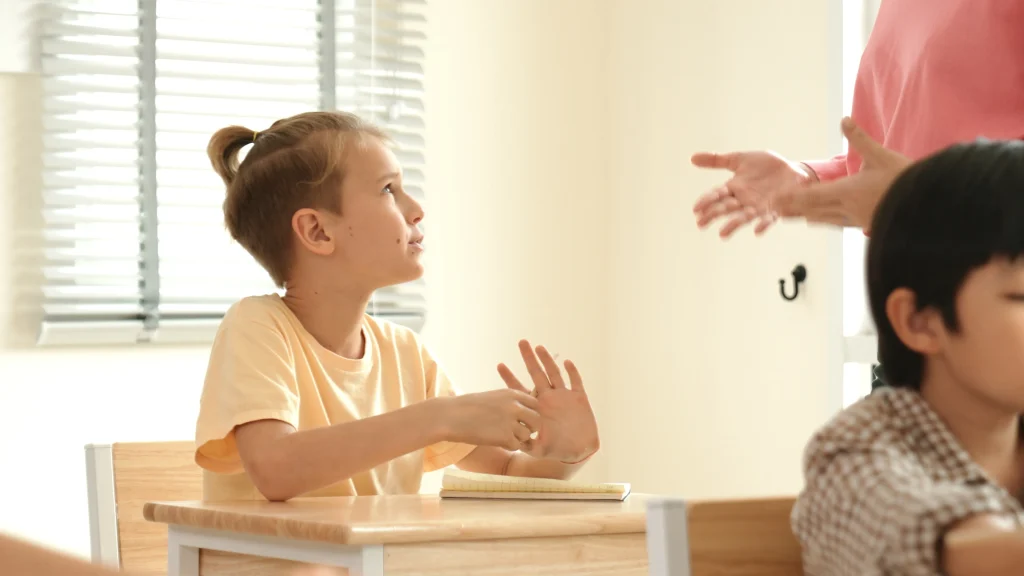
Every parent has moments when their patience runs low.
Perhaps your child has ignored the same instruction three times. Maybe siblings are fighting while you are trying to leave the house. Or your toddler has thrown another tantrum just as you are already late, tired, and carrying too many things.
In those moments, yelling can feel automatic. It may stop the behaviour briefly because children are startled or frightened. However, it rarely teaches the skill you want them to use next time.
Learning how to discipline without yelling does not mean becoming passive, permissive, or endlessly patient. It means setting clear limits while keeping your message firm, respectful, and focused on teaching.
Children still need boundaries. They need consequences when rules are broken. They also need adults who can show them how to handle frustration, repair mistakes, and make better choices over time.
The goal is not perfection. Every parent may lose their temper occasionally. What matters is developing more effective habits, noticing what triggers escalation, and returning to connection after difficult moments.
Editorial note: This article is informed by guidance from the American Academy of Pediatrics, the CDC, Singapore’s Early Childhood Development Agency, Singapore HealthHub, and peer-reviewed parenting research. It is for general education and does not replace individual advice from a paediatrician, psychologist, counsellor, or child-development professional.
Why Yelling Usually Does Not Create Lasting Behaviour Change
Yelling often happens when parents feel unheard, rushed, embarrassed, or overwhelmed. It is understandable. Yet when a child is frightened, upset, or dysregulated, they are less able to process a long explanation or learn a new skill.
The American Academy of Pediatrics recommends positive forms of discipline such as clear limits, redirecting, positive reinforcement, and future expectations. It advises parents not to use threats, insults, humiliation, shaming, hitting, or slapping.
Research also suggests that harsh verbal discipline can be harmful when it becomes a repeated pattern. A longitudinal study of 976 two-parent families found that harsh verbal discipline during early adolescence predicted increases in conduct problems and depressive symptoms one year later. The study also found that behaviour challenges and harsh discipline could reinforce each other, creating a difficult cycle for both parents and children.
This does not mean one raised voice will damage a child permanently. Parenting is not defined by one difficult evening. Nevertheless, it is useful to recognise that repeated shouting can become part of a pattern that neither parent nor child wants.
A 2023 study of young children found that verbal reasoning was associated with lower odds of aggression and better peer relationships, while psychological and physical aggression were associated with more behavioural difficulties.
Discipline Is About Teaching, Not Just Stopping Behaviour
Discipline comes from the idea of teaching. It is not simply about making children obey in the moment.
For example, when a child hits a sibling, the immediate goal is safety. However, the longer-term goal is helping the child learn what to do when they are angry, frustrated, or unable to get what they want.
Instead of only saying:
“Stop hitting!”
A parent can say:
“I will not let you hit. Hitting hurts. You can say, ‘I am angry,’ or come to me for help.”
The boundary remains firm. Yet the child also receives a replacement skill.
Singapore’s ECDA encourages parents to view challenging behaviour as communication. A child may be tired, hungry, overwhelmed, seeking attention, avoiding a difficult task, or struggling to understand what is expected.
Understanding the reason behind behaviour does not mean allowing unsafe behaviour. It simply helps parents respond more effectively.
Start With Clear Rules Children Can Actually Follow
Children are more likely to cooperate when expectations are clear, realistic, and repeated consistently.
Vague instructions such as “Behave yourself” or “Stop being difficult” may not tell a child what to do next. Instead, use specific and observable language.
Try replacing:
- “Stop making a mess” with “Please put the blocks back in the basket.”
- “Don’t be rude” with “Use a respectful voice and try again.”
- “Stop running around” with “Walk inside the house.”
- “Be quiet” with “Use your indoor voice.”
The CDC recommends getting close, gaining a child’s attention, and giving directions clearly rather than shouting from across the room.
For younger children, one direction at a time is often enough. Long explanations can wait until everyone is calmer.
Keep Family Rules Short and Consistent
A few clear family rules are easier to remember than a long list.
For example:
- Use gentle hands.
- Speak respectfully.
- Put things back after using them.
- Ask before taking someone else’s belongings.
- Stay close to an adult in public places.
The CDC notes that clear rules help children understand what is expected and gives examples such as waiting for a turn, using an inside voice, and avoiding interrupting.
Consistency matters because children test whether a rule still applies when adults are tired, busy, or distracted.
Pause Before You React to Challenging Behaviour
A calm response often starts before you speak.
When you notice yourself becoming angry, try creating a small pause. You may not be able to leave the room, especially if a child needs supervision. However, you can slow down your reaction.
Try this short reset:
- Stop speaking for a moment.
- Take one slow breath.
- Lower your voice rather than raising it.
- Move closer to your child.
- Use one short sentence.
For example:
“I am angry, but I am going to speak calmly. Toys are not for throwing.”
ECDA advises parents who are on the verge of losing their temper to pause, take slow breaths, and model the self-regulation they want children to develop.
This does not mean you must hide every emotion. Children can learn that adults feel frustrated too. The important lesson is that frustration does not need to become shouting, name-calling, or intimidation.
Use Calm, Immediate, and Logical Consequences
Consequences work best when they are connected to the behaviour, happen soon after it, and are followed through calmly.
For example:
- If a child throws a toy, the toy is put away for a while.
- If a child spills water while playing after being reminded to stop, they help wipe it up.
- If a child refuses to put crayons away, the crayons are unavailable until the next activity.
- If siblings cannot use a game safely together, the game is paused.
The CDC explains that a consequence is what happens immediately after a behaviour. Positive consequences can encourage behaviours parents want to see more often, while appropriate negative consequences can discourage unsafe or disruptive behaviours.
The key is to avoid turning consequences into lectures.
Instead of:
“You never listen. I have told you a hundred times. Now you have ruined everything.”
Try:
“You threw the truck after I told you not to. The truck is taking a break now.”
The message is clear, calm, and easier for a child to understand.
Focus on Repair, Not Shame
When children make mistakes, help them repair the situation where possible.
For example:
- Pick up the blocks that were thrown.
- Offer a caring action after hurting a sibling.
- Help clean a mess.
- Try a respectful sentence again.
- Practise the expected behaviour before returning to play.
Repair teaches responsibility. Shame often teaches children that they are “bad,” rather than helping them understand what to do differently.
Notice the Behaviour You Want More Of
Parents naturally focus on behaviour that causes stress. However, children are more likely to repeat behaviours that receive specific positive attention.
The CDC recommends giving children attention and praise when they follow instructions or demonstrate positive behaviour, while limiting attention for minor defiant behaviour such as whining or attention-seeking tantrums when it is safe to do so.
Specific praise is more useful than general praise.
Try:
- “You came when I called you. Thank you.”
- “You put your shoes on without arguing.”
- “You waited for your turn even though it was hard.”
- “You used words instead of grabbing.”
- “You cleaned up after playing. That was responsible.”
This is not about praising every small action. It is about helping children notice what they are doing well, especially when they are learning a new habit.
Use Choices to Reduce Power Struggles
Many conflicts happen because children want more control than the situation allows.
You do not need to let children decide everything. However, limited choices can help them feel respected while keeping the parent in charge of the boundary.
Examples include:
- “Would you like to brush your teeth before or after pyjamas?”
- “Do you want to walk to the car or hold my hand?”
- “Would you like the red cup or the blue cup?”
- “Do you want to tidy the books first or the blocks first?”
The choice should be real, but both options should be acceptable to you.
Avoid asking an open question when there is no real choice. For example, instead of asking, “Do you want to leave the playground?” when it is already time to go, say:
“It is time to leave. Would you like to walk to the gate or hop like a bunny?”
Respond Differently to Tantrums, Whining, and Unsafe Behaviour
Not every behaviour needs the same response.
When a Child Is Having a Tantrum
During a tantrum, your child may not be ready to listen to logic.
Focus first on safety and calm:
- Stay nearby if your child needs comfort or supervision.
- Keep your own words minimal.
- Remove dangerous objects.
- Hold the boundary.
- Talk about the situation after your child has calmed down.
For example:
“You are upset because we are leaving. I understand. It is still time to go.”
You can acknowledge the feeling without changing the limit.
When a Child Whines for Attention
For safe, minor whining or attention-seeking behaviour, reducing attention can be more effective than arguing.
The CDC explains that planned ignoring can be appropriate for attention-seeking behaviours such as whining, interrupting, or some tantrums, provided the behaviour is safe. It does not mean neglecting the child; it means removing attention from the unwanted behaviour and returning positive attention when the behaviour stops.
Once your child uses a calmer voice, respond quickly:
“I can hear you now. What would you like to ask?”
When Behaviour Is Unsafe
Unsafe behaviour needs an immediate response.
Examples include hitting, biting, running into the road, throwing hard objects, or hurting another child.
Move close, stop the behaviour, and use a firm statement:
“I will not let you hit.”
“Throwing blocks can hurt someone. I am putting them away.”
“You must hold my hand near the road.”
The American Academy of Pediatrics notes that clear, calm, confident limit-setting is often more effective than punishment when responding to aggressive behaviour in young children.
Build Routines That Prevent Some Conflicts Before They Start
Many difficult moments are more likely when children are hungry, tired, rushed, overstimulated, or asked to shift activities suddenly.
Therefore, prevention can be part of discipline.
Helpful routines may include:
- Giving a five-minute warning before transitions
- Keeping snacks and meals reasonably predictable
- Preparing bags and clothes the night before
- Building in extra time before leaving home
- Using a visual routine for mornings or bedtime
- Offering a quiet break after preschool or enrichment class
- Setting expectations before entering a shop, restaurant, or playground
For example, before entering a store, you might say:
“We are buying groceries. You can help put apples in the trolley. We are not buying toys today.”
This is often more effective than addressing the request only after your child sees a toy they want.
What to Do When You Have Already Yelled
Every parent can have a hard day.
When you have yelled, the next step is not to pretend it did not happen. Instead, repair the connection and model accountability.
You might say:
“I was very frustrated, and I yelled. That was not the right way to speak. I am sorry. The rule still matters, but I will try to speak more calmly next time.”
This does not remove the boundary. It shows your child that adults can make mistakes, take responsibility, and try again.
HealthHub emphasises that parent-child relationships play an important role in children’s emotional development and that children benefit when adults help them work through difficult emotions.
Repair is not a weakness. It is part of teaching emotional responsibility.
When Parenting Support May Be Helpful
Some behaviour challenges are part of normal development. However, parents should consider additional support when behaviour is frequent, intense, unsafe, or affecting family life, school, friendships, or a child’s wellbeing.
It may be helpful to speak with a paediatrician, family doctor, school counsellor, psychologist, or parenting professional when a child:
- Hurts themselves or others repeatedly
- Has frequent intense meltdowns that do not improve with consistent support
- Shows major changes in mood, sleep, eating, or social behaviour
- Struggles across multiple settings, including home and school
- Is regularly excluded from activities because of behaviour
- Has developmental, sensory, communication, or attention concerns alongside behaviour challenges
Parent-focused behavioural programmes can make a meaningful difference. A systematic review and meta-analysis of 40 randomised controlled trials found that parenting interventions generally produced sustained reductions in disruptive child behaviour for up to three years, although results varied across studies and programmes.
Seeking support is not a sign of failure. It is a practical step toward getting strategies that fit your child and your family.
Frequently Asked Questions
Is yelling ever effective?
Yelling may stop behaviour briefly because it is startling. However, it does not reliably teach children what to do differently next time. Clear limits, calm consequences, and specific positive attention are generally more helpful for building lasting behaviour skills.
Does discipline without yelling mean no consequences?
No. Calm discipline still includes consequences. The difference is that consequences are clear, immediate, connected to the behaviour, and delivered without shaming or lengthy arguments.
What should I do when my child ignores me?
Move closer, gain their attention, give one short instruction, and wait briefly. Avoid repeating the same direction from across the room. The CDC recommends getting close and making sure your child is paying attention before giving a direction.
How can I stay calm when my child is pushing every button?
Start by lowering the immediate pressure: pause, breathe, use fewer words, and focus on safety. Afterwards, look for patterns such as hunger, tiredness, rushed transitions, unclear expectations, or a need for more predictable routines.
Firm Boundaries Can Still Feel Safe
Discipline without yelling is not about allowing difficult behaviour or avoiding consequences.
It is about becoming the calm, steady adult your child can learn from—even when their behaviour is frustrating. Clear expectations, short instructions, logical consequences, positive attention, and repair after mistakes can make discipline more effective and less emotionally exhausting.
You will not stay calm every time. No parent does.
However, each time you pause, lower your voice, name the boundary, and teach a better choice, you are building something more lasting than immediate obedience: trust, emotional skills, and a stronger relationship with your child.