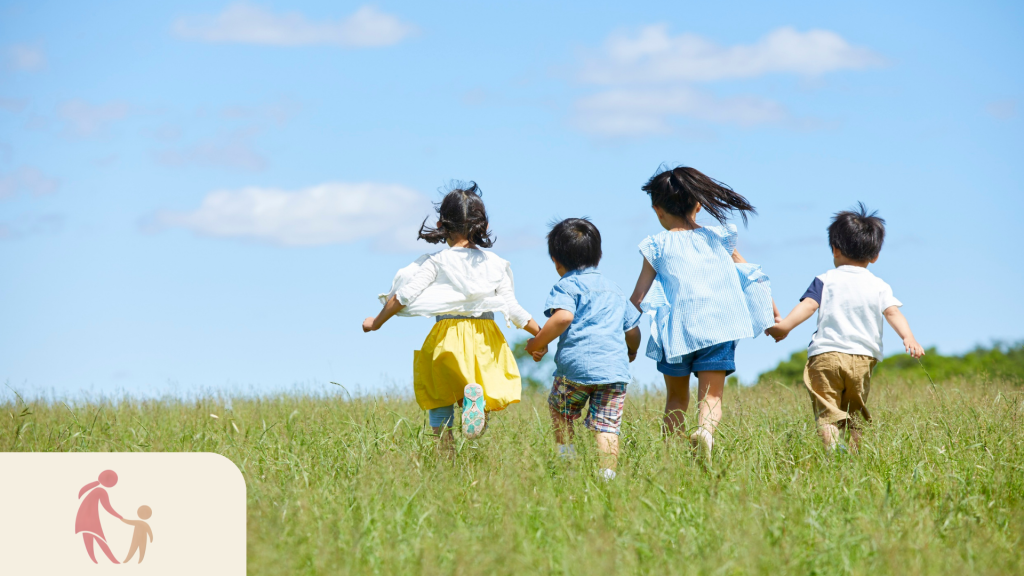
Some children walk into a playground and immediately ask, “Can I play too?” Others stay close to a parent, watch quietly, or struggle to work out what to say.
Then there are children who desperately want to play but interrupt too often, become upset when they lose, grab a toy instead of asking, or walk away when a social situation becomes uncomfortable.
These moments can worry parents. However, social skills for kids are learned skills, not personality tests. A child does not need to become the loudest or most outgoing person in the room to become socially capable.
Social development includes much more than making friends. Children gradually learn how to listen, take turns, read facial expressions, express needs, understand another person’s point of view, cooperate, handle disagreement, apologise, set boundaries, and repair relationships after conflict.
Those abilities develop over years. More importantly, children build them through repeated interactions with parents, siblings, teachers, classmates, and other people around them.
What Are Social Skills?
Social skills are the behaviours and communication abilities people use to interact with others. For children, this might look like:
- saying hello
- listening while someone else speaks
- asking to join a game
- taking turns
- sharing materials
- noticing when someone is upset
- expressing disagreement without hitting
- understanding personal space
- following simple group rules
- asking for help
- accepting “no”
- handling losing
- apologising
- solving a disagreement
- knowing when someone wants to stop playing
Some of these skills sound simple to adults. For a young child, however, they involve several abilities working together at once. Imagine a child trying to join three other children building a block tower.
First, they need to notice what the group is doing. Then they need to decide how to approach, find the right words, wait for a response, understand the other children’s reactions, and manage disappointment if the answer is not what they hoped for.
That is a lot of social information to process in a few seconds.
Why Social Skills for Kids Matter
Strong social skills can support friendships, classroom participation, communication, emotional development, and independence.
They also form part of school readiness.
The American Academy of Pediatrics’ HealthyChildren guidance lists abilities such as taking turns, cooperating, following directions, making friends, showing empathy, controlling impulses, and communicating emotions among the social, emotional, and behavioural skills that can help children adjust to school.
The connection with learning is worth noting too.
A 2025 meta-analysis reviewed 22 studies involving 24,510 elementary and middle-school students. Social and emotional learning programmes produced a small positive effect on overall academic achievement, although the researchers noted that most studies involved elementary-school children and results varied by study design.
The takeaway is not that sociable children automatically perform better academically. Rather, skills such as listening, cooperating, managing emotions, asking questions, and handling frustration can make it easier for children to participate in learning environments.
Social Development Looks Different at Different Ages
Children do not develop every social skill at once.
A toddler may play beside another child without truly playing with them. A preschooler may want to cooperate but still become upset when another child changes the rules. Later, school-age children begin handling more complicated friendship dynamics, humour, fairness, group expectations, and conflict.
By age five, the US Centers for Disease Control and Prevention lists behaviours such as following rules or taking turns while playing with other children among common social-emotional milestones. Its milestone framework refers to skills that at least 75% of children can do by the stated age.
However, milestones are guides rather than deadlines. Temperament matters too.
A quieter child may take longer to warm up in a new group while still having healthy social skills. Meanwhile, an outgoing child may approach everyone easily but still need help listening, respecting boundaries, or coping with disagreement.
So, social confidence should not be confused with extroversion.
Can Social Skills Actually Be Taught?
Yes. Research suggests that practice can help.
A 2020 meta-analysis examined 97 articles and 839 effect sizes involving social skills programmes for children and adolescents without clinical diagnoses. Overall, the programmes produced a positive effect on interpersonal and emotional skills. Programmes that included direct skill-building activities and age-appropriate teaching about social behaviour tended to perform better.
Research with younger children has found similar results.
A separate meta-analysis covering 25 studies, 151 effect sizes, and 3,484 preschool children with or at risk of emotional and behavioural difficulties reported an overall intervention effect size of 0.54.
In practical terms, children do not have to simply “figure it out” alone.
Parents can teach, model, practise, and create opportunities for social learning.
9 Ways to Build Social Skills in Everyday Life
Social learning does not require a formal lesson every afternoon. Many of the most useful opportunities happen during ordinary play, family routines, conversations, outings, and small disagreements.
1. Practise Real Conversations
Children learn communication through communication.
Instead of asking only questions that require one-word answers, create opportunities for back-and-forth conversation.
Rather than:
“Did you have fun today?”
Try:
“What was the funniest thing that happened today?”
Or:
“What did you and your friend build?”
Then listen to the answer and ask a related question.
These exchanges teach children that conversation moves in two directions.
Harvard’s Center on the Developing Child describes responsive back-and-forth interactions between children and adults as “serve and return.” These exchanges help support early language and social development and strengthen the neural pathways involved in communication.
2. Teach Children How to Join Play
“Go make friends” sounds easy to an adult.
A child may have no idea how to do it.
Give them simple scripts they can use:
“Can I play too?”
“What are you building?”
“Can I be on your team?”
“Do you want to play tag?”
You can practise these situations through pretend play at home.
One person can pretend to be the group while the other practises approaching, waiting, and asking to join.
Then switch roles.
The aim is not to make the interaction scripted forever. Instead, the script gives the child somewhere to start.
3. Work on Listening, Not Only Talking
Some children are confident speakers but still struggle socially because conversations become one-sided. Help your child notice that listening is part of connecting. You can teach simple habits such as:
- letting someone finish before replying
- looking toward the speaker when comfortable
- responding to what the other person said
- asking follow-up questions
- noticing when someone else wants a turn to speak
At the same time, avoid turning normal conversation into constant correction. Children need genuine interaction, not a running performance review.
4. Use Play to Teach Turn-Taking
Games naturally create small social challenges. Someone has to wait. Someone may lose. Someone may make a mistake. Someone may disagree with the rules. That makes games useful practice.
Simple board games, card games, building activities, pretend shops, cooperative puzzles, and outdoor games can all create opportunities to practise patience and flexibility.
The CDC specifically recommends simple games that involve rules and turn-taking as one way parents can support development around age five. It also encourages opportunities for children to play with other children because these experiences help them learn about sharing and friendship.
5. Help Kids Read Other People’s Feelings
Empathy begins partly with noticing. During a story, film, or real-life situation, ask:
“How do you think she feels?”
“What makes you think that?”
“What could he need right now?”
“What might happen if someone keeps doing that?”
Children can learn to notice facial expressions, tone of voice, body language, and context.
However, avoid demanding that your child always “make someone happy.”
Empathy means understanding another person’s feelings. It does not mean being responsible for everyone’s emotions.
6. Let Children Handle Small Conflicts
When two children argue over a toy, adults often want to solve the problem immediately. Sometimes that is necessary, especially when someone may get hurt. At other times, however, a manageable disagreement can become a learning opportunity. You might guide rather than solve:
“You both want the same toy. What could we do?”
“Sam wants another turn. What do you think would be fair?”
“You didn’t like what she said. How could you tell her?”
Give children time to suggest solutions.
Perhaps they take turns, use a timer, choose another toy, combine their games, or decide they no longer want to play together.
Problem-solving becomes stronger through practice.
7. Model the Behaviour You Want to See
Children watch adults closely. If you interrupt people regularly but tell your child not to interrupt, the message becomes confusing. Instead, make social behaviour visible.
Let your child hear you say:
“Sorry, I interrupted you. Finish what you were saying.”
“Thank you for helping me.”
“I don’t agree, but I understand what you mean.”
“I was frustrated earlier. I should have spoken more calmly.”
You do not need to create artificial lessons. Everyday adult interactions provide plenty of examples.
8. Give Your Child Opportunities to Mix With Others
Social skills need real people. Family gatherings, playgrounds, preschool, sports, enrichment classes, art groups, community activities, and playdates can all provide practice.
Still, more activities are not automatically better. A child who attends classes every day but rarely has free, relaxed play may have fewer chances to negotiate games or solve spontaneous social problems.
Look for environments where children can interact naturally. Small groups may work especially well for children who feel overwhelmed in busy settings.
Likewise, some children prefer structured activities because knowing what everyone is doing reduces social uncertainty.
Follow your child’s needs instead of comparing them with a more outgoing sibling or classmate.
9. Talk About What Happened After Difficult Moments
A difficult playdate does not mean the day was wasted. Later, when everyone is calm, talk about what happened.
Instead of:
“Why were you so rude?”
Try:
“What happened when Max took the car?”
“What were you hoping would happen?”
“What do you think Max wanted?”
“What could you try if that happens again?”
This turns a mistake into information. The conversation should feel curious rather than accusing. Children are usually more open to learning when they do not feel that every mistake proves something negative about who they are.
What If Your Child Is Shy?
Shyness is not the same as poor social skills. Some children need time to observe before participating. They may prefer one close friend to a large group or speak freely at home while staying quiet in unfamiliar environments.
That can fall within normal temperament. Forcing a hesitant child to perform socially can sometimes make the experience harder. Instead, try gradual steps.
For example:
- Let your child watch the group.
- Join the activity with them.
- Encourage interaction with one child.
- Step back when they become comfortable.
- Repeat the experience another time.
Progress might look like waving before saying hello, watching before joining, or talking comfortably with one new person instead of five. Those are still social steps.
Common Mistakes Parents Can Avoid
Parents usually mean well, but some approaches can add pressure.
Labelling a Child as “Shy” in Front of Others
Saying “She’s shy” every time your child stays quiet can become part of how they see themselves.
Try:
“She likes to take a little time before joining.”
Solving Every Social Problem
Children need support, but they also need chances to think.
Step in when safety, bullying, or serious distress is involved. Otherwise, ask questions before providing the answer.
Forcing Children to Share Everything
Sharing is a useful social skill, but children can also learn boundaries.
Taking turns may sometimes make more sense than demanding that a child immediately give away something they are using.
Expecting Adult-Level Self-Control
Preschoolers are still learning.
A child who knows the rule may still grab, interrupt, cry, or become frustrated.
Teaching usually requires repetition.
Comparing Siblings or Friends
“Look how easily your brother makes friends” rarely teaches a skill.
Instead, focus on the specific behaviour your child can practise.
When Might a Child Need Extra Support?
Social development varies widely. Still, persistent difficulties that affect daily life are worth discussing with a qualified professional.
Consider speaking with your child’s paediatrician, teacher, psychologist, speech-language therapist, or child-development professional if your child consistently:
- avoids interaction with adults and peers
- finds back-and-forth communication very difficult
- rarely responds to social approaches
- becomes extremely distressed in ordinary social situations
- struggles to understand basic social cues over time
- frequently becomes aggressive during peer interactions
- loses social or communication skills they previously had
- has friendship difficulties that cause significant distress
- struggles with communication across several environments
One behaviour by itself does not explain why a child is struggling. Language ability, anxiety, temperament, hearing, attention, development, previous experiences, sensory needs, and other factors can all affect social interaction.
For that reason, professional assessment looks at the whole child rather than simply labelling them as “bad at socialising.”
Social Skills Grow Through Small Moments
Children do not learn friendship from one conversation about being kind. They learn through hundreds of ordinary moments. Waiting for a turn. Asking to join. Hearing “no.”
Trying again. Listening to another idea. Losing a game. Telling someone to stop. Saying sorry. Making up after an argument. Helping someone who feels left out.
Parents do not need to control every one of these moments. Instead, you can create safe opportunities, model respectful communication, offer words when your child gets stuck, and give them space to practise.
Research supports this practice-based approach. Social skills training studies consistently show that children can improve interpersonal abilities when skills are taught clearly and practised repeatedly.
Most importantly, the goal is not to raise a child who is popular with everyone. The goal is to help your child communicate clearly, understand others, respect boundaries, work through everyday conflict, and feel capable of forming healthy relationships.
That growth may happen loudly on a playground. Or it may begin with something much smaller: “Hi. Can I play too?”