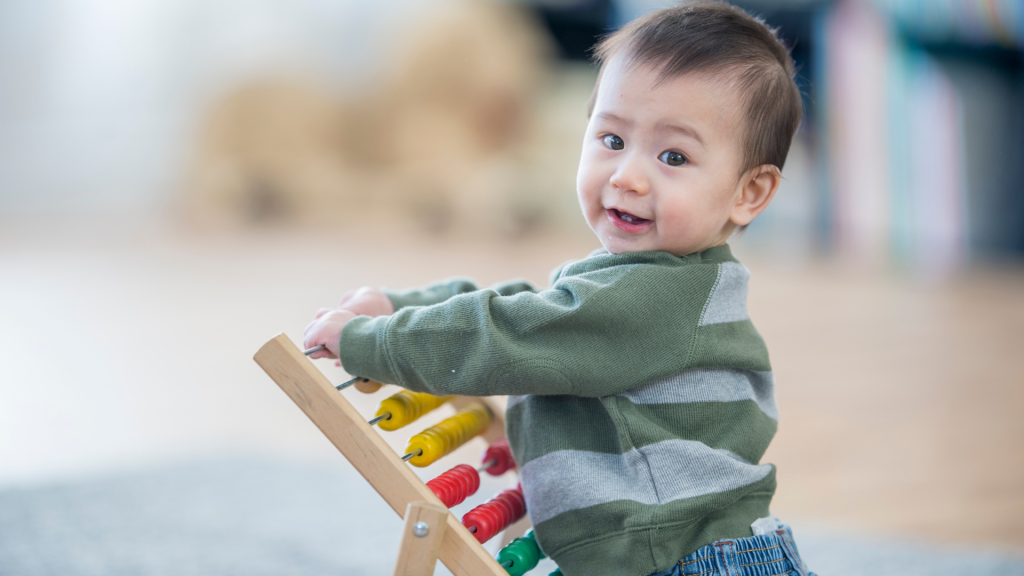
Toddlers learn in motion. They learn when they stack blocks, pour water, copy animal sounds, point at pictures, sing the same song again, or ask for the same book every night. To adults, these moments may look small. However, for toddlers, they are powerful learning experiences.
The toddler years are a period of rapid growth across language, thinking, movement, emotional awareness, and social connection. A toddler is not only learning “facts.” They are learning how the world works, how people respond, how objects move, how words carry meaning, and how they can solve small problems independently.
This is why toddler learning activities should not feel like formal lessons. Instead, they should feel like play, exploration, conversation, and connection. Research from organizations such as UNICEF, the American Academy of Pediatrics, CDC, WHO, Harvard’s Center on the Developing Child, and NAEYC consistently highlights the importance of early experiences, responsive caregiving, play-based learning, movement, and social interaction in young children’s development.
The good news is that parents do not need expensive toys or a complicated schedule. Many of the best toddler learning activities can happen at home, during daily routines, or through simple play using everyday objects.
Below is a practical, parent-friendly guide to help toddlers learn naturally while still enjoying childhood.
Why Toddler Learning Activities Matter
Learning during the toddler years is not limited to letters, numbers, or colors. In fact, toddlers develop through many connected areas at the same time.
A simple activity like building a tower may support:
- Fine motor skills as the child picks up blocks
- Problem-solving as they figure out balance
- Language as parents describe “tall,” “fall,” or “again”
- Emotional regulation when the tower collapses
- Social skills when the child takes turns
- Memory as they repeat the same action
According to UNICEF, early childhood is a critical period for brain development, and the quality of early experiences can influence learning, health, and behavior later in life. Similarly, the American Academy of Pediatrics describes play as a meaningful way to support executive function, language, social-emotional growth, and brain development.
Therefore, learning activities do not need to be intense. What matters more is whether they are responsive, age-appropriate, engaging, and repeated often enough for toddlers to build confidence.
How Toddlers Learn Best
Before choosing activities, it helps to understand how toddlers naturally learn.
Toddlers learn through repetition
A toddler may want to read the same book ten times or knock down the same tower again and again. Although this can feel repetitive for adults, repetition helps children strengthen memory, prediction, and confidence.
Toddlers learn through senses
Young children need to touch, move, listen, smell, see, and explore. Sensory experiences help them understand differences such as wet and dry, soft and hard, loud and quiet, big and small.
Toddlers learn through relationships
Children learn best when they feel safe and connected. A parent’s warm response, eye contact, conversation, and encouragement can turn ordinary moments into meaningful learning.
Toddlers learn through play
Play is not separate from learning. It is one of the main ways toddlers practise thinking, communicating, moving, imagining, and problem-solving.
Toddler Learning Activities Parents Can Try at Home
1. Sorting Everyday Objects
Sorting helps toddlers notice similarities and differences. You can use socks, spoons, blocks, toy cars, cups, or plastic containers.
Ask your child to sort by:
- Color
- Size
- Shape
- Type
- Texture
- Use
For example, you can say, “Let’s put all the big spoons here and the small spoons there.” If your toddler creates their own sorting rule, follow their thinking and ask, “Why did you put this one here?”
Why it helps
Sorting supports observation, categorization, early math thinking, attention, and language. It also teaches toddlers that objects can be grouped in more than one way.
2. Read-Aloud and Picture Talk
Reading is one of the most valuable toddler learning activities because it supports language, listening, memory, imagination, and emotional understanding.
However, toddlers do not always sit quietly through a full story, and that is okay. Instead of focusing only on finishing the book, make reading interactive.
Try asking:
- “What do you see?”
- “Where is the dog?”
- “What sound does the cow make?”
- “What do you think will happen next?”
- “How does the child feel?”
You can also connect the story to real life: “This character is brushing teeth, just like you do before bed.”
Why it helps
Interactive reading builds vocabulary, comprehension, prediction, attention, and parent-child connection. It also prepares toddlers for later literacy skills in a gentle way.
3. Building Blocks and Stacking Play
Blocks are simple, but they offer deep learning. Toddlers can stack, knock down, compare, build roads, make towers, or pretend blocks are food, houses, or cars.
You can guide learning by saying:
- “This tower is taller.”
- “The red block is under the blue block.”
- “It fell down. Should we try again?”
- “What can we build next?”
Why it helps
Block play supports spatial reasoning, problem-solving, fine motor skills, creativity, and persistence. It also introduces early science ideas such as balance, weight, and cause and effect.
4. Water Pouring Activity
Water play is often a favorite for toddlers. During bath time or outdoor play, provide cups, spoons, funnels, and containers of different sizes.
Let your toddler pour, scoop, transfer, and compare. You can ask:
- “Which cup has more water?”
- “What happens when we pour it here?”
- “Is this container full or empty?”
- “Can you fill the small cup?”
Always supervise water play closely.
Why it helps
Water play supports sensory exploration, hand-eye coordination, early science thinking, vocabulary, and problem-solving.
5. Pretend Play With Simple Props
Pretend play helps toddlers use imagination and symbolic thinking. You do not need a full toy kitchen or costume set. A spoon can become a microphone, a box can become a bus, and a blanket can become a picnic mat.
Ideas include:
- Pretend cooking
- Doctor and patient play
- Grocery shopping
- Feeding a doll or teddy
- Talking on a pretend phone
- Driving a pretend bus
- Cleaning with a small cloth
Why it helps
Pretend play supports language, memory, creativity, empathy, planning, and social-emotional development. It also gives toddlers a safe way to practise real-life situations.
6. Matching Games
Matching games help toddlers recognize patterns and similarities. Start with simple pairs and gradually increase the challenge.
You can match:
- Socks
- Animal toys and animal pictures
- Shape cards
- Colored blocks
- Lids and containers
- Family photos
- Toy cars by color or size
For younger toddlers, use only two or three options. For older toddlers, offer more choices.
Why it helps
Matching supports visual discrimination, memory, concentration, and early classification skills. These are important foundations for preschool learning.
7. Movement Games
Toddlers need to move. Movement supports physical development, but it also helps with listening, attention, self-control, and confidence.
Try games such as:
- Freeze dance
- Animal walks
- Follow the leader
- Jumping on safe soft surfaces
- Crawling through a pillow tunnel
- Rolling a ball back and forth
- Walking along a tape line on the floor
WHO guidelines for young children emphasize the importance of physical activity, adequate sleep, and limiting long periods of sedentary behavior.
Why it helps
Movement activities support gross motor skills, balance, coordination, attention, body awareness, and self-regulation.
8. Music and Action Songs
Songs with actions are excellent for toddlers because they combine rhythm, memory, language, and movement.
Try:
- Clapping songs
- Finger plays
- Songs with repeated words
- Stop-and-go music
- Fast and slow dancing
- Loud and quiet rhythm games
- Simple homemade instruments
You can use a spoon and container as a drum or shake dry pasta in a sealed bottle.
Why it helps
Music supports auditory memory, sequencing, vocabulary, listening, imitation, and emotional expression. It also makes learning joyful and social.
9. Simple Puzzle Play
Puzzles help toddlers practise problem-solving. Start with chunky puzzles, shape sorters, or two-piece picture puzzles. If your child gets frustrated, guide gently without taking over.
Say:
- “Let’s turn it.”
- “Does it fit here?”
- “Look at the shape.”
- “You tried again. That was helpful.”
Why it helps
Puzzle play builds spatial awareness, patience, hand-eye coordination, problem-solving, and persistence. It also teaches children that trying different strategies can lead to success.
10. Nature Walk Learning
A short walk outside can become a rich learning activity. Toddlers can observe leaves, birds, flowers, clouds, ants, puddles, stones, and sounds.
Ask simple questions:
- “What do you hear?”
- “Which leaf is bigger?”
- “Is the ground wet or dry?”
- “Can you find something green?”
- “Where is the bird going?”
Why it helps
Nature walks support observation, curiosity, vocabulary, sensory awareness, and early science thinking. They also encourage toddlers to slow down and notice the world around them.
11. Helping With Daily Routines
Daily routines are full of learning opportunities. Toddlers often enjoy helping because it gives them a sense of independence.
Let your child help with:
- Putting toys in baskets
- Matching socks
- Washing fruits
- Placing spoons on the table
- Watering plants
- Wiping a small spill
- Choosing between two outfits
- Packing a simple bag
Why it helps
Routine-based learning supports sequencing, responsibility, independence, language, and practical problem-solving.
12. “What’s Missing?” Memory Game
Place two or three familiar objects in front of your toddler. Ask them to look carefully. Then cover the objects, remove one, and ask, “What’s missing?”
Start simple. If your child is very young, use only two objects.
Why it helps
This activity supports memory, attention, recall, and visual thinking. It also helps toddlers practise holding information in mind.
13. Sticker and Tape Play
Stickers and painter’s tape can create simple fine motor and problem-solving activities.
You can invite your toddler to:
- Place stickers inside circles
- Pull tape from the wall
- Match stickers by color
- Make a road with tape
- Put stickers on paper shapes
- Create a simple picture
Use toddler-safe materials and supervise closely.
Why it helps
Sticker and tape activities strengthen fine motor skills, concentration, hand control, creativity, and visual planning.
14. Counting in Real Life
Toddlers do not need formal math worksheets. Counting is more meaningful when it happens naturally.
Count:
- Steps
- Snacks
- Blocks
- Shoes
- Toy animals
- Fingers
- Cups on the table
You can say, “One, two, three strawberries,” while placing them on a plate.
Why it helps
Real-life counting builds number awareness, sequencing, attention, and early math language. Accuracy will come later; exposure and repetition are the first steps.
15. Emotion Naming Activities
Learning is not only cognitive. Emotional understanding is also important for toddler development.
During play or daily routines, name emotions:
- “You look frustrated because the block fell.”
- “You are excited to go outside.”
- “The character in the book looks sad.”
- “You were angry, but now you are calming down.”
You can also use picture books or facial expression cards.
Why it helps
Emotion naming supports self-awareness, language, empathy, and early self-regulation. It also helps toddlers understand that emotions can be expressed safely.
How to Choose the Right Toddler Learning Activities
Not every activity fits every child. A good toddler learning activity should be simple, safe, flexible, and matched to your child’s interest.
Follow your child’s curiosity
If your child loves animals, use animal toys for counting, matching, pretend play, and storytelling. If your child loves cars, create roads, sort by color, count wheels, or pretend to visit different places.
Keep activities short
Many toddlers have short attention spans. A learning activity may last only five to ten minutes, and that is normal. It is better to have short joyful moments than long sessions filled with frustration.
Balance structure and freedom
Some guidance is helpful, but toddlers also need room to explore. For example, you can introduce a sorting activity, then allow your child to create their own game with the same objects.
Avoid too much pressure
Toddlers do not need to master academic skills early to be successful. Instead, they need curiosity, confidence, language, movement, problem-solving, and emotional security.
Screen Time and Toddler Learning
Some digital content can be educational, especially when parents watch together and talk about what the child sees. However, hands-on interaction remains essential for toddlers.
WHO recommends limiting sedentary screen time for young children and encouraging active play, sleep, and non-screen-based interaction. Therefore, screens should not replace reading, movement, outdoor play, conversation, or sensory exploration.
A helpful approach is to ask: “Is this screen time replacing something important?” If the answer is yes, it may be time to rebalance the routine.
When Parents Should Seek Guidance
Every toddler develops at their own pace. Some children speak earlier, while others focus more on movement. Some love puzzles, while others prefer pretend play.
However, parents may want to speak with a pediatrician, child development specialist, or early childhood educator if their toddler:
- Loses skills they previously had
- Does not respond to their name
- Rarely makes eye contact
- Does not try to communicate needs
- Shows little interest in play
- Has difficulty following simple instructions by around age three
- Seems significantly delayed compared with developmental milestones
The CDC encourages parents to monitor milestones and seek support early when there are concerns. Early guidance can help families understand what a child needs and how to support them.
Conclusion
Toddler learning activities do not need to be complicated. In fact, the most meaningful activities are often the simplest: reading a book, stacking blocks, pouring water, singing a song, sorting socks, walking outside, or pretending a box is a bus.
What matters most is the interaction behind the activity. When parents talk, respond, encourage, and play with their toddlers, they create a learning environment that supports curiosity, confidence, language, thinking, movement, and emotional growth.
The goal is not to rush children into academic achievement. Instead, it is to help them enjoy learning through everyday experiences. With the right balance of play, routine, connection, and gentle guidance, toddlers can build strong foundations for preschool and beyond.
References
- American Academy of Pediatrics. “The Power of Play: A Pediatric Role in Enhancing Development in Young Children.” Pediatrics, 2018.
- American Academy of Pediatrics. “Power of Play in Early Childhood.”
- Centers for Disease Control and Prevention. “Developmental Milestones by 2 Years” and “Developmental Milestones by 3 Years.”
- Center on the Developing Child at Harvard University. “A Guide to Executive Function.”
- NAEYC. “Defining Developmentally Appropriate Practice.”
- UNICEF. “Early Childhood Development.”
- UNICEF Data. “Early Childhood Development Overview.”
- World Health Organization. “Guidelines on Physical Activity, Sedentary Behaviour and Sleep for Children Under 5 Years of Age.”
- ZERO TO THREE. “Play Activities for 12 to 24 Months.”