A baby’s first steps are one of the most exciting milestones in early childhood. For many parents, that tiny wobble forward feels like the beginning of a whole new chapter. Suddenly, the baby who once stayed in one place is reaching, cruising, balancing, and exploring the world with more independence.
However, this milestone can also create worry. Parents may start comparing their baby with other children. One baby may walk at 10 months, another at 14 months, and another closer to 18 months. Naturally, this leads to the common question: when should baby start walking?
The reassuring answer is that walking develops across a wide range. Many babies take their first independent steps around their first birthday, but it is also normal for some babies to walk earlier or later. What matters is not only the exact age, but also whether your baby is gradually building strength, balance, coordination, curiosity, and confidence.
Walking is not a single event. It is a process. Before babies walk independently, they usually learn to roll, sit, crawl or move in their own way, pull to stand, cruise along furniture, squat, balance, and finally take those first wobbly steps.
This guide explains the typical walking timeline, signs your baby may be getting ready, safe ways to encourage walking, what to avoid, and when parents should speak with a pediatrician or child development professional.
When Should Baby Start Walking?
Most babies start walking independently sometime between 12 and 18 months. Some may take their first steps a little before 12 months, while others may need more time. In many cases, both can still fall within normal development.
According to major child development references, many babies can pull themselves to stand and walk while holding furniture around 12 months. By around 15 months, many children can take a few steps on their own. By around 18 months, many toddlers can walk without holding on to anyone or anything.
However, parents should remember that milestones are guides, not strict deadlines. Babies develop at different speeds depending on muscle strength, temperament, opportunities for movement, body size, confidence, and overall development.
A simple walking milestone timeline
Here is a general walking progression many babies follow:
- Around 6 to 9 months: Sitting, rolling, pivoting, and beginning to move more actively
- Around 8 to 10 months: Pulling to stand using furniture or a caregiver’s hands
- Around 9 to 12 months: Cruising along furniture while holding on
- Around 12 months: Standing briefly or walking with support
- Around 12 to 15 months: Taking first independent steps
- Around 15 to 18 months: Walking more confidently without support
- Around 18 to 24 months: Climbing, squatting, carrying toys while walking, and beginning to run
Again, this is a flexible timeline. A baby who is not walking at 12 months is not automatically delayed. At the same time, if parents feel concerned, it is always appropriate to ask a healthcare professional.
Why Babies Start Walking at Different Ages
It can be tempting to compare babies, especially when another child of the same age is already walking. However, walking depends on several developmental pieces coming together.
Muscle strength and balance
Babies need strong legs, hips, core muscles, and balance before they can walk. Activities such as tummy time, rolling, crawling, pulling up, and squatting all help build this foundation.
Confidence and personality
Some babies are bold explorers. They may let go and try walking even if they fall often. Others are more cautious and prefer cruising until they feel secure. A careful baby may walk later simply because they are waiting until they feel ready.
Movement style
Not all babies crawl in the classic hands-and-knees style before walking. Some scoot, roll, army crawl, bear crawl, or move in unique ways. What matters most is that they are gaining mobility, strength, coordination, and curiosity.
Practice opportunities
Babies need safe spaces to move. If they spend too much time in seats, strollers, carriers, or devices that restrict movement, they may have fewer chances to practise standing, cruising, and balancing.
Prematurity or medical factors
Babies born prematurely may reach milestones according to their adjusted age. In addition, some medical, neurological, vision, hearing, or muscle-related conditions can influence motor development. This is why developmental checkups are important.
Signs Your Baby May Be Getting Ready to Walk
Before a baby walks, there are often small signs of readiness. These signs show that your baby is developing strength, coordination, and interest in movement.
Common signs of walking readiness
Your baby may be getting closer to walking if they:
- Pull themselves up to stand
- Cruise along furniture
- Stand while holding one hand
- Let go briefly while standing
- Squat down and stand back up
- Bounce while standing
- Push a stable toy or box forward
- Reach for nearby furniture
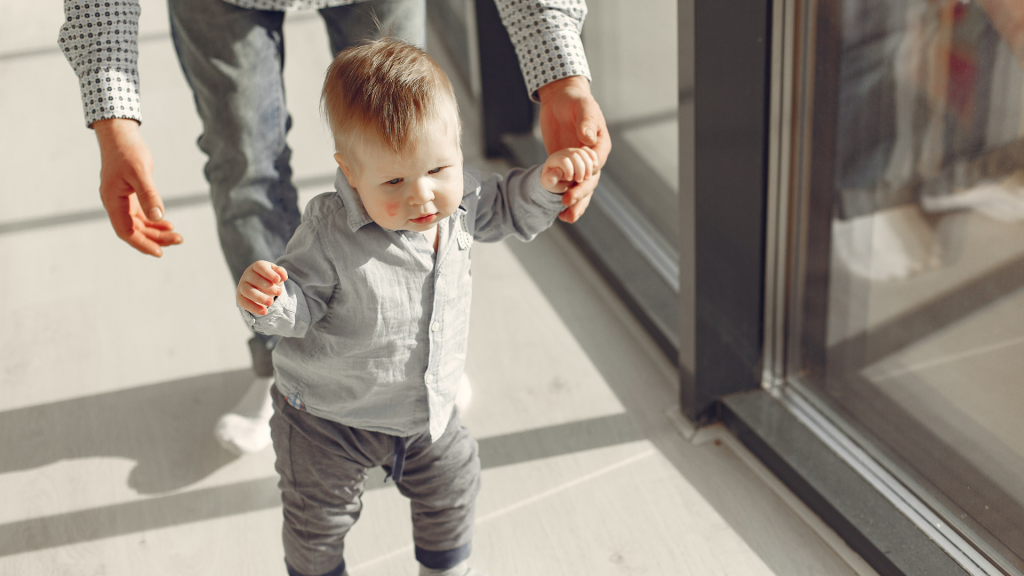
- Take steps while holding your hands
- Show excitement when standing or moving
At first, the steps may look awkward. Your baby may walk with feet wide apart, arms raised, and a wobbly body. This is normal. Wide steps help babies balance while they are still learning.
How Parents Can Safely Encourage Walking
Parents do not need to “train” a baby to walk. In fact, pushing too hard can create frustration. Instead, the best approach is to create a safe, encouraging environment where babies can practise naturally.
1. Give plenty of floor time
Floor time allows babies to move freely. This is where they build strength through rolling, reaching, crawling, sitting, and pulling up.
Try placing toys slightly out of reach so your baby is encouraged to move. However, keep it playful. If the toy is too far away, your baby may become frustrated.
2. Encourage pulling to stand
Place sturdy furniture, such as a low sofa or stable table, within reach. Let your baby pull up using safe surfaces.
You can also place a favorite toy on the sofa to encourage standing. Stay close, especially when your baby is still learning how to sit back down safely.
3. Support cruising
Cruising happens when a baby walks sideways while holding furniture. This is an important stage because it builds balance and leg coordination.
You can support cruising by placing toys along the sofa or coffee table so your baby has a reason to move from one side to another.
4. Practise with your hands, but avoid pulling
It is fine to let your baby hold your hands while stepping. However, avoid pulling them forward or lifting their arms too high. The goal is to support balance, not force walking.
A better approach is to hold your baby’s hands low and let them shift weight naturally.
5. Use barefoot time indoors
When it is safe and clean, barefoot time can help babies feel the floor and develop balance. Bare feet allow toes and foot muscles to work naturally.
Shoes are mainly needed for outdoor protection. For early walkers, choose shoes that are lightweight, flexible, and properly fitted.
6. Celebrate effort, not speed
A baby may stand, fall, try again, crawl away, and return later. That is part of learning. Celebrate small attempts with smiles, claps, and warm encouragement.
Say things like:
- “You stood up!”
- “You tried again!”
- “You took one step!”
- “That was brave!”
This builds confidence without pressure.
What Parents Should Avoid
Some products and habits may seem helpful but can actually interfere with natural walking development or create safety risks.
Avoid baby walkers with wheels
Baby walkers with wheels are not recommended. Many parents believe they help babies walk faster, but pediatric guidance warns that they do not help babies learn to walk and may increase injury risks. They can move quickly, allow babies to reach dangerous objects, and increase the risk of falls, burns, drowning, or poisoning.
Instead, safer alternatives include:
- Floor play
- Stationary activity centers
- Play yards
- Stable push toys used with supervision
- Cruising along furniture
Avoid forcing early walking
Walking early is not a sign that a child will be smarter or more successful. Likewise, walking later within the normal range does not mean a child is behind intellectually.
If a baby is not ready, forcing walking can create stress for both parent and child. Development works best when support matches the child’s readiness.
Avoid too much time in restrictive equipment
Strollers, car seats, high chairs, bouncers, and carriers are useful when needed. However, if a baby spends too much of the day in restrictive equipment, they may have fewer opportunities to move freely.
Balance is key. Babies need supervised floor time every day.
Safety Tips for New Walkers
Once your baby starts walking, the home environment changes. A child who can move independently can reach new places very quickly.
Baby-proof the walking space
Before your baby becomes more mobile, check your home from their eye level.
Important safety steps include:
- Secure heavy furniture to the wall
- Cover sharp corners
- Keep hot drinks away from table edges
- Lock cabinets with cleaning products or medicines
- Keep small choking hazards out of reach
- Use safety gates near stairs
- Keep bathroom doors closed
- Remove unstable furniture from walking areas
- Keep electrical cords out of reach
- Avoid slippery socks on smooth floors
Create a safe practice area
A safe walking area does not need to be large. It simply needs to be clear, stable, and supervised.
You can use a soft mat, open floor space, or a play area with sturdy furniture nearby. Keep the space calm enough for your baby to focus on movement.
When to Talk to a Doctor
Because every baby develops differently, not walking at exactly 12 months is usually not a reason to panic. However, parents should seek professional guidance if they notice certain concerns.
Speak with a pediatrician if your baby:
- Is not pulling to stand by around 12 months
- Is not taking any independent steps by around 15 to 18 months
- Is not walking independently by 18 months
- Uses one side of the body much more than the other
- Has very stiff or very floppy muscles
- Often stands on tiptoes and cannot place feet flat
- Seems to lose skills they previously had
- Does not show interest in moving or exploring
- Has delayed milestones in several areas, such as movement, communication, and social interaction
Parents know their child best. If something feels concerning, it is better to ask early rather than wait in silence. Early support can be very helpful when a child needs it.
How Walking Supports Learning and Independence
Walking is more than a physical milestone. It changes how babies explore the world.
Once babies can walk, they can reach objects, follow caregivers, carry toys, explore new spaces, and interact differently with their environment. This can support cognitive, social, and emotional development.
For example, walking allows children to:
- Explore cause and effect
- Practise problem-solving
- Build confidence
- Develop independence
- Interact more actively with people
- Strengthen spatial awareness
- Learn new words through movement and discovery
However, mobility also means children need closer supervision, clearer boundaries, and safe opportunities to explore.
Simple Activities to Support Walking Readiness
These activities can help support your baby’s motor development without pressure.
Toy reach game
Place a toy slightly out of reach while your baby is sitting or standing with support. This encourages reaching, shifting weight, and movement.
Sofa cruising trail
Place toys along the sofa so your baby moves sideways while holding on. This encourages cruising and balance.
Sit-to-stand practice
Place your baby on your lap or a low, stable surface and encourage them to stand up to reach a toy. Keep it playful and stop if they become tired.
Push-and-follow play
Use a stable push toy only when your baby is already pulling to stand and showing readiness. Supervise closely and avoid fast-moving toys that roll too easily.
Barefoot balance time
Let your baby stand barefoot on a safe, clean floor while holding furniture. This helps them feel the ground and practise balance.
Conclusion
So, when should baby start walking? Many babies take their first steps around their first birthday, while others walk closer to 15 or 18 months. This range can be completely normal, especially if your baby is gradually building strength, balance, curiosity, and movement skills.
Rather than rushing the milestone, focus on creating safe opportunities for practice. Offer floor time, encourage cruising, support standing, avoid baby walkers, and celebrate small progress. Most importantly, trust your observations. If your baby is not walking by 18 months, loses skills, or shows other developmental concerns, speak with a pediatrician or child development professional.
Walking is not a race. It is a journey from wobbling to confidence, from holding on to letting go, and from small steps to a much bigger world.
References
- Centers for Disease Control and Prevention. “Milestones by 1 Year.”
- Centers for Disease Control and Prevention. “Milestones by 15 Months.”
- Centers for Disease Control and Prevention. “Milestones by 18 Months.”
- HealthyChildren.org / American Academy of Pediatrics. “Movement Milestones in Babies 8 to 12 Months Old.”
- HealthyChildren.org / American Academy of Pediatrics. “Baby Walkers: A Dangerous Choice.”
- HealthHub Singapore. “The Beginner’s Guide to Taking Care of Your Toddler: 13 to 18 Months.”
- Singapore General Hospital. “Toddler Milestones: A Guide to Developmental Progression 12 to 18 Months.”