
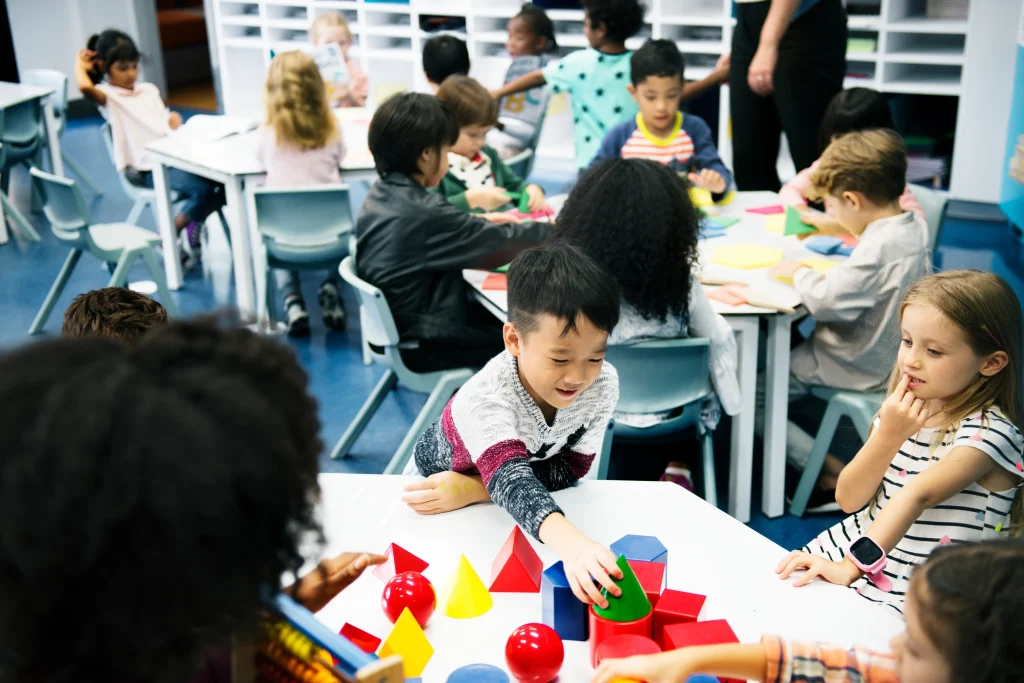
Parents often hear about enrichment classes long before they feel fully ready to choose one.
A friend may recommend phonics. Another parent may mention coding, speech and drama, gymnastics, robotics, art, Mandarin, music, or an early sports programme. Soon, it can feel as though every child has a carefully planned timetable—and every parent needs to catch up.
However, enrichment should not be about filling every afternoon or trying to turn childhood into a competition. At its best, an enrichment class gives children a chance to explore an interest, practise a skill, build confidence, and learn through experiences that may not fit neatly into a regular school day.
The right class can support a child’s development. Yet the right choice will look different for every family. Some children thrive in a lively group setting, while others need smaller groups, more movement, or simply more free time at home.
This guide explains what enrichment classes are, how they can support children’s learning, and how parents can choose activities that feel meaningful rather than overwhelming.
Enrichment Classes Explained: Learning Beyond the Regular Classroom
An enrichment class for kids is a structured activity designed to extend learning beyond a child’s usual school or preschool curriculum.
Unlike regular academic lessons, enrichment classes often focus on a wider mix of skills. These may include creativity, movement, communication, problem-solving, social interaction, confidence, language, or practical thinking.
For example, a child may attend:
- Art, craft, or creative-making classes
- Music, dance, or drama programmes
- Sports, swimming, martial arts, or gymnastics
- Coding, robotics, or STEM exploration
- Speech and communication classes
- Reading, phonics, or language programmes
- Chess, strategy games, or problem-solving activities
- Nature, science, or hands-on discovery sessions
In simple terms, enrichment is meant to broaden a child’s learning experience. It gives them opportunities to discover what they enjoy, practise persistence, and build skills through repeated participation.
That said, enrichment is not the same as tuition.
Tuition usually focuses on helping children improve performance in a school subject. Enrichment, on the other hand, often aims to develop broader interests and capabilities. Of course, some programmes may overlap. A literacy class, for instance, may support reading ability while also encouraging confidence, storytelling, and communication.
Why Purposeful Learning Experiences Matter in Childhood
Children do not learn only by listening to instructions or completing worksheets. They also learn through play, conversation, experimentation, movement, imitation, mistakes, and relationships.
Singapore’s Nurturing Early Learners framework emphasises that preschool education should nurture joy in learning, holistic development, active learning, social-emotional skills, confidence, and curiosity. It also highlights that children learn by experimenting and experiencing.
This is why a good enrichment class should feel more like purposeful discovery than pressure.
A child learning drama may be practising confidence and communication. A child building a simple robot may be learning patience, sequencing, and problem-solving. Meanwhile, a child joining a sports class may be developing coordination, teamwork, resilience, and the ability to follow group instructions.
The activity itself matters. However, the skills that grow around the activity can be just as valuable.
Building Executive Function Through Everyday Challenges
Executive function refers to a group of skills that help children focus, remember instructions, manage impulses, switch between tasks, and plan what to do next.
The Center on the Developing Child at Harvard University describes executive function and self-regulation as core abilities that help people manage information, make decisions, and plan ahead. These skills are not fixed at birth; they develop over time through supportive experiences and practice.
This means enrichment does not need to be highly academic to be valuable.
A music class may involve waiting for a turn. A dance lesson may require remembering sequences. A science activity may encourage children to test an idea, observe what happens, and try again. Gradually, these experiences can support habits that are useful in school and everyday life.
Learning Through Play Is Still Real Learning
Play is sometimes treated as separate from learning. In reality, play can be one of the ways children learn best.
The American Academy of Pediatrics notes that play supports social-emotional, cognitive, language, and self-regulation skills. It also helps children build secure, nurturing relationships with adults.
Therefore, parents do not need to choose between “fun” and “educational.” The strongest programmes often blend both.
A quality class may look playful from the outside, yet still be carefully designed to help children listen, collaborate, communicate, explore, and build confidence.
The Different Types of Enrichment Classes for Children
There is no single “best” enrichment class. The most suitable option depends on your child’s stage of development, personality, interests, and current needs.
Creative and Performing Arts Programmes
Art, music, dance, drama, and craft-based programmes give children space to express ideas in different ways.
These classes can be a good fit for children who enjoy storytelling, movement, drawing, singing, role-playing, or making things with their hands. More importantly, creative programmes can help children become comfortable sharing ideas without needing every answer to be “correct.”
A shy child may not suddenly become outgoing after one drama class. However, over time, a supportive environment can help them speak up, take small risks, and feel proud of their progress.
Sports and Movement-Based Activities
Sports, swimming, martial arts, gymnastics, and movement programmes can support physical coordination, confidence, and social development.
Children often learn practical life skills through movement. They may practise listening to instructions, managing disappointment, trying again after mistakes, and working with others toward a shared goal.
The focus should not always be performance. For younger children especially, a class that prioritises safety, enjoyment, age-appropriate movement, and participation is often more beneficial than one that introduces intense pressure too early.
Language, Literacy, and Communication Classes
Language and literacy classes may support reading readiness, vocabulary, storytelling, pronunciation, comprehension, or confidence in speaking.
These programmes can be useful when they are interactive and suited to a child’s developmental stage. For example, a young child may benefit more from stories, songs, role-play, and conversation than from long periods of drilling.
Parents should also consider whether the class supports genuine interest in communication—not only early academic results.
STEM, Coding, and Problem-Solving Classes
STEM enrichment may include simple science experiments, building activities, robotics, coding, engineering challenges, or logic-based games.
These classes can help children practise curiosity, persistence, and structured thinking. They may also encourage children to see mistakes as part of the learning process.
For preschool-aged children, the most suitable STEM programmes usually remain hands-on and play-based. The goal is not to create an expert coder at age five. Instead, it is to help children ask questions, test ideas, and enjoy solving small problems.
What Research Says About Extracurricular Participation
Research suggests that organised activities can be associated with positive wellbeing outcomes. However, it is important to interpret these findings carefully.
A population-level study involving 27,121 fourth-grade children found that children participating in sports or a broader mix of extracurricular activities reported higher levels of wellbeing and perceived health than children who did not participate in activities. However, the study was cross-sectional, which means it found an association rather than proving that activities directly caused better wellbeing.
This distinction matters.
A class alone does not guarantee confidence, happiness, or academic success. The child’s motivation, the quality of teaching, family support, peer relationships, and overall schedule all shape the experience.
Still, well-matched activities can create valuable opportunities for children to connect with others, build competence, and discover interests outside their usual routine.
How to Choose an Enrichment Class That Fits Your Child
The best starting point is not, “Which class is most popular?”
Instead, ask: “What would help my child enjoy learning at this stage?”
A child does not need to be naturally talented before trying something new. Curiosity is often a better signal than early ability.
Before enrolling, consider these five areas:
1. Your Child’s Interest
Notice what your child already gravitates towards.
Do they spend time drawing, building, singing, running, pretending, asking questions, or telling stories? Their everyday play can offer useful clues.
For instance, a child who constantly creates imaginary worlds may enjoy drama or storytelling. A child who loves sorting, building, or taking things apart may be interested in science or construction-based activities.
2. Developmental Readiness
A class should match your child’s attention span, physical abilities, communication skills, and emotional readiness.
A child who finds separation difficult may need a parent-accompanied programme first. Meanwhile, a child who gets overwhelmed in large groups may benefit from a smaller class or a quieter activity.
Modern Parents’ child-development guidance also recommends choosing enrichment that fits a child’s age, attention span, interests, and emotional readiness—not simply performance expectations.
3. Teaching Style and Learning Environment
Observe how the instructor speaks to children.
Are children encouraged to ask questions? Are mistakes treated as part of learning? Is there enough movement, interaction, and age-appropriate guidance?
A good class does not need to be noisy all the time. However, children should appear engaged rather than fearful, bored, or constantly pressured.
4. Class Size and Individual Attention
A smaller group may be helpful for children who need more guidance or are still building confidence. On the other hand, some children enjoy the energy of a bigger group.
Ask how instructors support children who are shy, easily distracted, new to the activity, or struggling with a task.
5. Schedule and Family Rhythm
An enrichment class should fit into family life rather than take it over.
Children still need sleep, unstructured play, meals, movement, and time with family. HealthHub notes that preschoolers aged three to five generally need around 10 to 13 hours of sleep daily, while children aged six to 13 need about nine to 11 hours.
Therefore, a packed weekly schedule may not always be the best choice—even when every activity seems beneficial on paper.
Signs Your Child May Be Ready for a Class
A child may be ready for an enrichment programme when they:
- Show interest in a particular activity
- Can participate in a short group activity with guidance
- Can separate from a parent comfortably, or are ready for parent-accompanied sessions
- Respond well to a predictable routine
- Enjoy practising a skill more than once
- Have enough rest and free time outside the class
However, readiness is not about being perfectly focused, confident, or independent. Children join classes partly to develop these skills.
The key is to choose a setting where they can learn gradually without feeling constantly overwhelmed.
When Enrichment Starts to Feel Like Too Much
A child may enjoy one or two activities but struggle when every afternoon is structured.
Watch for signs that the current schedule may need adjustment:
- Frequent resistance before class
- Ongoing tiredness or difficulty waking up
- Losing interest in activities they previously enjoyed
- More emotional outbursts after busy days
- No time for relaxed family routines or free play
- A child who seems worried about making mistakes
This does not mean the class is automatically wrong. Sometimes children need time to settle into a new routine. Nevertheless, parents should take repeated stress seriously.
In addition, screen-free activities can be valuable, but they should not become another source of pressure. HealthHub recommends balancing screens with physical activity, play, drawing, reading, and social interaction with parents, caregivers, and peers.
The goal is balance, not a perfect timetable.
Questions Parents Should Ask Before Enrolling
Before committing to a programme, consider asking:
- What skills or experiences does the class focus on?
- Is the programme suitable for my child’s age group?
- How much of the lesson is play-based, hands-on, or interactive?
- What is the teacher-to-child ratio?
- How do instructors support children who are shy or struggling?
- Can my child attend a trial lesson first?
- How is progress communicated to parents?
- What happens when a child needs more time to settle in?
- Is there pressure to perform, compete, or complete homework outside class?
- Will the schedule still leave room for sleep, play, and family time?
These questions help parents evaluate whether a programme is genuinely child-centred.
Enrichment Classes Are Not a Measure of Good Parenting
It is easy to feel that a child needs every possible advantage. Yet a full schedule does not automatically mean a richer childhood.
Children can learn through classes, but they also learn at home while cooking, reading, playing, talking, helping with simple tasks, visiting the library, spending time outdoors, and being bored enough to invent their own games.
An enrichment class can be a wonderful addition. It does not have to become proof that a child is ahead or that a parent is doing enough.
The healthiest approach is usually one that makes room for both guided learning and ordinary childhood moments.
Choose Growth, Not Pressure
Enrichment classes can give children meaningful opportunities to explore, practise, create, move, and connect. They can support confidence, curiosity, communication, and problem-solving when the experience matches the child.
However, the best class is not always the most advanced, the most expensive, or the most popular. It is the one that gives your child space to participate, feel capable, and enjoy learning.
Start with one interest. Observe how your child responds. Keep enough room for rest, play, and family life.
Over time, enrichment should help children discover more of who they are—not make them feel that they always need to become more.