
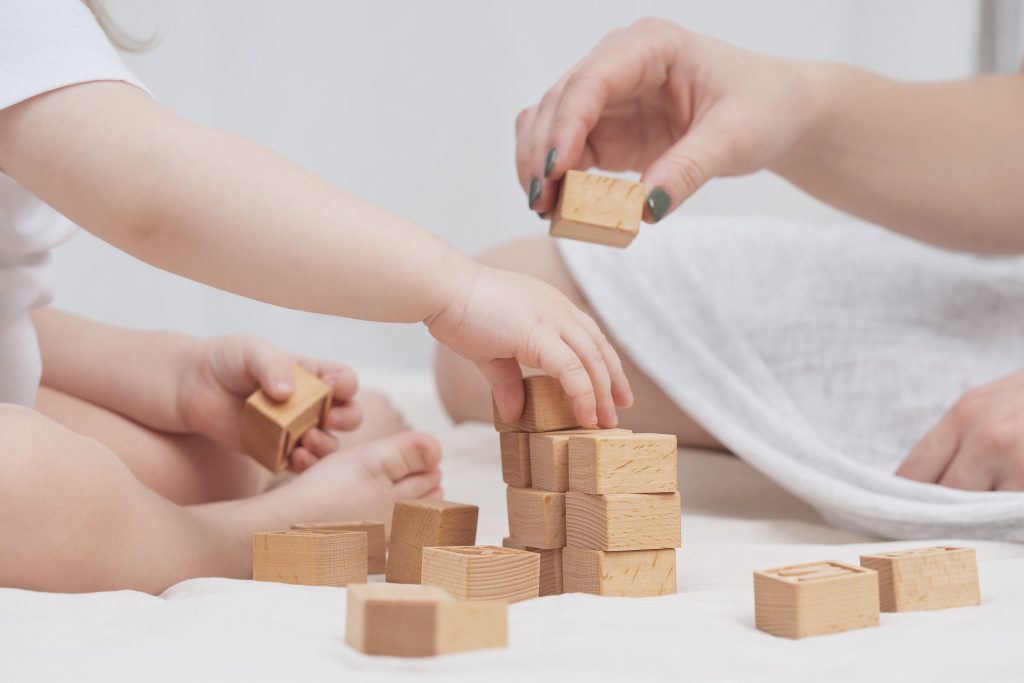
Every child grows in their own way. Some children walk earlier, some talk earlier, some are naturally sociable, while others take more time to warm up. Because of this, many parents wonder what is normal, what to expect next, and how to support their child at each stage.
Understanding the stages of child development helps parents see growth as a journey rather than a checklist. Child development is not only about height, weight, or academic ability. It includes how children move, communicate, think, play, manage emotions, build relationships, and become more independent over time.
The CDC explains that developmental milestones are skills most children can do by a certain age, such as smiling, waving, taking a first step, playing, learning, speaking, acting, and moving. These milestones are helpful because they give parents clues about how a child is developing across different areas.
However, milestones should not be used to compare children harshly. Instead, they are best used as a guide. Children develop at different speeds, but parents should usually see steady progress over time. When concerns appear, early support can make a meaningful difference.
UNICEF notes that in the first few years of life, more than one million neural connections are formed every second. This rapid brain development is shaped by children’s environments, relationships, nutrition, stimulation, and early experiences.
Therefore, the early years are not just a waiting period before “real school” begins. They are a powerful foundation for learning, confidence, behaviour, health, and emotional well-being.
Understanding Stages of Child Development as a Whole-Child Process
Child development is often divided into different domains. These include physical development, cognitive development, language development, social-emotional development, and approaches to learning.
NAEYC explains that all domains of child development—physical, cognitive, social-emotional, and linguistic development are important and support one another. This means growth in one area often affects growth in another.
For example, a toddler who develops better motor skills may explore more confidently. A child who develops stronger language may express needs with fewer tantrums. A preschooler who feels emotionally secure may participate more actively in group learning. In other words, child development is connected.
Parents should avoid focusing only on one area, such as early reading or counting. Academic readiness is valuable, but it grows best when children also have emotional safety, language-rich interaction, active play, rest, and positive relationships.
Infancy: The Foundation of Trust, Senses, and Connection
Infancy usually refers to the first year of life. During this stage, babies grow rapidly. They learn through touch, sound, movement, facial expressions, and repeated interaction with caregivers.
At this age, development is deeply connected to relationships. Babies learn that the world is safe when adults respond to their cries, smiles, sounds, and needs. These early interactions support emotional security and brain development.
The WHO’s Nurturing Care Framework highlights the importance of caregiver support, responsive care, health, nutrition, safety, and early learning so children can survive and thrive.
Key Areas of Infant Development
During infancy, parents may notice growth in several areas:
- Physical development: lifting the head, rolling, sitting, crawling, reaching, grasping, and eventually pulling up
- Language development: cooing, babbling, responding to voices, and turning toward familiar sounds
- Cognitive development: tracking objects, exploring with hands and mouth, recognizing familiar people, and showing curiosity
- Social-emotional development: smiling, seeking comfort, responding to facial expressions, and forming attachment
Infants do not need formal lessons. They need responsive caregiving, talking, singing, cuddling, tummy time, safe exploration, and consistent routines.
How Parents Can Support Infants
Parents can support infant development by:
- Talking and singing during daily care
- Responding warmly to cries and sounds
- Offering safe objects to touch and explore
- Giving supervised tummy time
- Making eye contact and facial expressions
- Creating calm sleep and feeding routines
- Reading simple picture books
Small daily interactions matter. A baby who hears a parent’s voice during feeding, bath time, and diaper changes is already learning language, rhythm, connection, and trust.
Toddlerhood: Independence, Movement, and Big Emotions
Toddlerhood is often one of the most exciting and challenging stages. Toddlers are active, curious, and increasingly independent. They want to explore, choose, climb, touch, imitate, and test limits. At the same time, their language and self-control are still developing.
The CDC notes that toddlers become more active, explore new things, show greater independence, and learn through play, naming objects, and simple problem-solving activities.
This explains why toddler behaviour can feel intense. A toddler may want to do something alone but still need adult help. They may understand more than they can say. They may feel angry or disappointed but lack the words to explain it.
Developmental Growth in Toddlers
Toddlers commonly show growth in:
- Gross motor skills: walking, running, climbing, kicking, dancing, and carrying objects
- Fine motor skills: stacking blocks, turning pages, feeding themselves, scribbling, and using simple tools
- Language: saying words, combining words, following simple instructions, and naming familiar things
- Cognitive skills: sorting, matching, pretending, solving simple problems, and remembering routines
- Social-emotional skills: showing preferences, copying adults, seeking independence, and expressing frustration
This is also the stage when tantrums are common. They are often not a sign of bad parenting or a bad child. Instead, they are usually signs of emotional overload, limited communication, or difficulty with transitions.
How Parents Can Support Toddlers
Toddlers benefit from structure and freedom. They need safe spaces to explore, but they also need clear boundaries.
Helpful strategies include:
- Offer simple choices, such as “blue shirt or red shirt?”
- Use short instructions, such as “shoes on” or “gentle hands”
- Create predictable routines for meals, naps, and bedtime
- Read books and name objects daily
- Encourage pretend play
- Give time for outdoor movement
- Use emotion words, such as “angry,” “sad,” “happy,” and “tired”
Most importantly, toddlers need adults who can stay calm during big emotions. A calm adult helps the toddler learn how to calm down over time.
Preschool Years: Imagination, Social Skills, and Early Learning
The preschool stage is usually between ages three and five. During this period, children become more expressive, imaginative, social, and curious. They ask many questions, create pretend worlds, make friends, tell stories, and begin understanding rules.
The CDC’s milestones for four-year-olds include skills such as naming colours, telling what comes next in a familiar story, drawing a person with several body parts, and showing growth across social, language, cognitive, and movement areas.
By five years old, the CDC explains that how a child plays, learns, speaks, acts, and moves offers important clues about development. Developmental milestones at this age are things most children can do by a certain age.
What Preschool Development Looks Like
Preschoolers often show growth in:
- Language and communication: longer sentences, storytelling, asking questions, explaining ideas, and following multi-step directions
- Cognitive development: counting, sorting, recognizing patterns, understanding simple time concepts, and solving problems
- Social-emotional development: taking turns, sharing with guidance, showing empathy, managing frustration better, and playing cooperatively
- Physical development: jumping, balancing, drawing, cutting, building, and using tools with more control
- Creative development: pretend play, art, music, dance, and storytelling
At this stage, play is still one of the best ways to learn. A child pretending to run a shop may practise counting, language, social roles, problem-solving, and emotional regulation all at once.
How Parents Can Support Preschoolers
Parents can support preschool development by:
- Reading together every day
- Asking open-ended questions
- Encouraging drawing, art, music, and pretend play
- Creating chances to play with peers
- Teaching simple responsibilities, such as cleaning toys
- Practising turn-taking games
- Supporting independence in dressing, eating, and packing items
- Praising effort, patience, and problem-solving
A strong preschool or enrichment environment can also help children practise social skills, creativity, communication, and early learning in a structured but playful setting.
Early School Age: Confidence, Rules, and Deeper Thinking
Early school age usually begins around six years old. Children at this stage become more capable of following routines, understanding rules, focusing for longer periods, and learning more structured skills.
They may begin to compare themselves with others, care more about friendships, and show pride in achievements. Because of this, emotional support remains important. A child who is learning to read, write, count, draw, solve problems, and work with classmates also needs confidence and encouragement.
Growth During Early School Age
Children may develop in areas such as:
- Stronger attention and memory
- Better problem-solving
- More detailed language
- Growing independence
- More stable friendships
- Better understanding of rules and fairness
- Improved emotional control
- Greater interest in hobbies, sports, art, music, or academic topics
At this age, children still need play, movement, rest, and family connection. Academic growth matters, but it should not replace emotional development and creativity.
How Parents Can Support Early School-Age Children
Parents can help by:
- Creating homework and reading routines
- Encouraging questions instead of only correct answers
- Supporting friendships and group activities
- Teaching responsibility through small tasks
- Helping children handle mistakes calmly
- Encouraging hobbies and enrichment activities
- Maintaining sleep and screen-time boundaries
- Celebrating effort, not only results
Children in this stage often benefit from enrichment classes that support creativity, confidence, communication, and problem-solving. These programmes should not only focus on performance. They should help children discover interests and build resilience.
Key Developmental Domains Parents Should Observe
Instead of thinking only in age categories, parents can also observe the main developmental domains. This helps create a more complete picture of a child’s growth.
Physical Development and Motor Skills
Physical development includes both large and small movements. Large motor skills involve walking, running, jumping, balancing, and climbing. Fine motor skills involve drawing, cutting, buttoning, holding utensils, and writing.
Physical development supports independence. For example, a child who can use a spoon, put on shoes, or hold a pencil is gaining confidence in daily routines.
Language and Communication Growth
Language development includes listening, understanding, speaking, gestures, vocabulary, conversation, and storytelling.
Parents can support language by talking often, reading aloud, singing, asking questions, and listening patiently. Children need real conversation, not only instructions.
Cognitive Development and Problem-Solving
Cognitive development includes memory, attention, curiosity, reasoning, imagination, and problem-solving.
Children build thinking skills when they explore, ask questions, play with blocks, complete puzzles, sort objects, create stories, and experiment with materials.
Social-Emotional Development
Social-emotional development includes attachment, self-confidence, empathy, emotional regulation, friendship, cooperation, and independence.
This area is deeply shaped by relationships. Children learn how to handle emotions when adults name feelings, set limits calmly, and model respectful behaviour.
Approaches to Learning
Approaches to learning include curiosity, persistence, creativity, flexibility, and willingness to try. These traits are important because they shape how children respond to challenges.
A child who keeps trying after a tower falls is building resilience. A child who asks “why” is building curiosity. A child who creates a new game is building flexible thinking.
Why Early Experiences Matter So Much
The early years are a sensitive period for brain development. UNICEF explains that early childhood, up to age eight, is critical for cognitive, social, emotional, and physical development. During this time, the brain is highly responsive to experiences, and optimal development requires stimulation, nutrition, and attentive social interaction.
This means parents and caregivers play an important role. The goal is not to create a perfect childhood. Rather, children need enough nurturing care, safety, play, communication, nutrition, sleep, and positive interaction to build a strong foundation.
Simple daily habits can have long-term value:
- Reading a bedtime story
- Talking during meals
- Playing outdoors
- Singing songs
- Letting children help with simple tasks
- Comforting them when upset
- Giving choices
- Encouraging effort
- Creating predictable routines
These moments may seem small, but they help shape how children learn and relate to the world.
Child Development Is Not Always Linear
Children do not develop in a perfectly straight line. A child may suddenly speak more words after weeks of quiet observation. Another child may become clingy during a transition, even after previously seeming independent. Growth can speed up, slow down, and shift depending on sleep, health, stress, environment, family changes, and learning opportunities.
NAEYC emphasizes that development and learning are dynamic processes and that children are active learners from birth. It also notes that while general progressions can be identified, variations should be considered.
Therefore, parents should look for patterns over time. One difficult week does not define a child’s development. However, repeated concerns should not be ignored.
When Parents Should Seek Guidance
Parents do not need to panic over every delay or difference. Still, professional guidance can be helpful when a child consistently struggles in one or more developmental areas.
Consider speaking with a paediatrician, early childhood educator, therapist, or child development professional if a child:
- Loses skills they previously had
- Does not respond to sounds, name, or familiar people
- Has very limited communication for their age
- Shows ongoing difficulty with movement or coordination
- Struggles significantly with social interaction
- Has extreme difficulty calming down across many situations
- Does not show gradual progress over time
- Has behaviour that affects safety, learning, or daily routines
Early support is not about labelling children. It is about understanding their needs and giving them the right help at the right time.
How Parents Can Support Every Stage of Child Development
Although each stage is different, some parenting practices support children across all ages.
Build Responsive Relationships
Children thrive when adults notice their cues, respond warmly, and create emotional safety. Responsive caregiving helps children feel secure enough to explore and learn.
Create Predictable Routines
Routines help children understand what comes next. This supports sleep, cooperation, independence, and emotional regulation.
Encourage Play-Based Learning
Play supports language, thinking, creativity, motor skills, and social development. It is not separate from learning; for young children, play is learning.
Read, Talk, and Sing Daily
Language grows through interaction. Books, songs, conversations, and storytelling give children words for the world around them.
Support Independence Gradually
Children build confidence when they can try things for themselves. Give age-appropriate tasks, such as cleaning toys, choosing clothes, feeding themselves, or helping prepare simple items.
Observe Without Over-Comparing
Comparison can create unnecessary pressure. Instead, observe your child’s progress, interests, strengths, and needs.
Choose Enrichment That Fits Development
Enrichment classes should match a child’s age, attention span, interests, and emotional readiness. A good class should support curiosity, creativity, confidence, social interaction, and skill-building, not just performance.
Development Is a Journey, Not a Race
The stages of child development help parents understand how children grow from infancy through toddlerhood, preschool, and early school age. Each stage brings new abilities, new emotions, new challenges, and new opportunities for learning.
However, development is not a competition. Children do not all grow at the same speed, and they do not all show strengths in the same way. What matters most is steady progress, supportive relationships, meaningful play, healthy routines, and early guidance when concerns appear.
Parents do not need to be perfect experts. They simply need to be attentive, responsive, and willing to learn alongside their child. With the right support, children can build the physical, cognitive, language, social-emotional, and creative skills they need to grow with confidence.