
Screens are now part of daily life. Children may use tablets, phones, televisions, laptops, and interactive apps for entertainment, learning, video calls, or relaxation. Because technology is so common, many parents wonder how to create a healthier balance without turning screen time into a daily battle.
The goal is not to make parents feel guilty. Screens can have a place in family life, especially when content is high-quality, age-appropriate, and used with adult guidance. However, children also need many experiences that screens cannot fully replace: running, building, drawing, pretending, talking, listening, touching, climbing, reading, helping, creating, and playing with real people.
The American Academy of Pediatrics explains that there is no single screen time limit that works for every child and family. Instead, families are encouraged to think about the quality of screen use, the child’s age and needs, and how media affects sleep, physical activity, relationships, schoolwork, and family routines.
That is why screen free activities for kids are so valuable. They do not simply “fill time” when devices are turned off. They help children build attention, confidence, imagination, language, motor skills, emotional regulation, and social connection.
The WHO recommends that children under five spend less time sitting with screens, get better sleep, and have more time for active play to support healthy growth and well-being. Meanwhile, the CDC states that children aged 3 to 5 should be active throughout the day, while children and adolescents aged 6 to 17 need at least 60 minutes of physical activity daily.
In other words, screen-free time is not just about reducing devices. It is about making more room for the kinds of experiences children need to develop well.
Why Screen-Free Play Matters for Child Development
Children learn best through active, hands-on experiences. When they stack blocks, splash water, draw pictures, climb safely, sing songs, make pretend food, or talk through a story, they are using their body, senses, memory, language, imagination, and emotions at the same time.
Screen-free play also gives children chances to practise patience, problem-solving, and flexible thinking. For example, when a tower falls, a child learns to try again. When two children want the same toy, they practise communication and turn-taking. When a child creates a pretend shop, they use language, memory, social roles, and creativity.
NAEYC, a professional association focused on high-quality early childhood education from birth through age eight, emphasizes developmentally appropriate early learning and the importance of experiences that support the whole child.
Therefore, screen-free activities should not be viewed as old-fashioned alternatives to digital learning. They are essential parts of healthy childhood.
Screen-Free Time Supports More Than Entertainment
When children spend time away from screens, they may gain more opportunities for:
- Physical movement
- Face-to-face communication
- Creative expression
- Independent play
- Emotional regulation
- Fine motor practice
- Outdoor exploration
- Family bonding
- Problem-solving
- Social confidence
Of course, children may initially complain when screens are reduced. That does not always mean they need the device. Often, it means they need help rediscovering how to play, imagine, and stay engaged without constant digital stimulation.
Screen Free Activities for Kids That Build Creativity
Creative activities are one of the easiest ways to replace screen time because they give children something meaningful to do with their hands and imagination. They also support emotional expression, fine motor development, and flexible thinking.
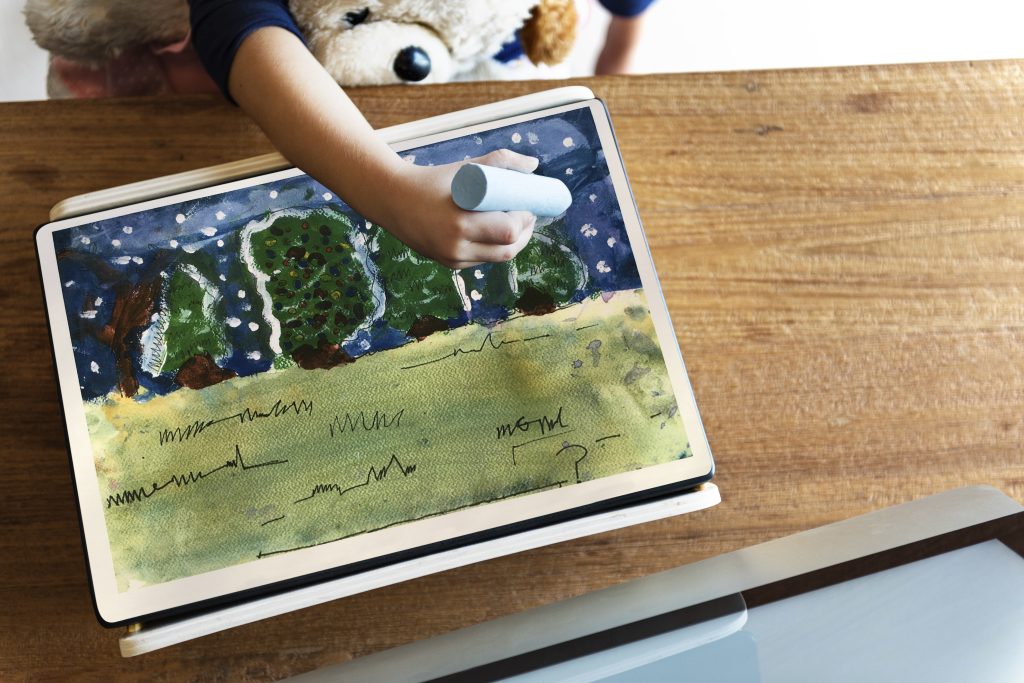
1. Open-Ended Drawing and Painting
Give children paper, crayons, washable markers, coloured pencils, or paint. Instead of telling them exactly what to draw, invite them to create freely.
Try prompts such as:
- “Draw a place you would like to visit.”
- “Create a new animal.”
- “Draw how today feels.”
- “Make a picture using only circles.”
- “Paint with your favourite colours.”
The goal is not perfect artwork. The goal is expression. When children create, they make decisions, test ideas, and build confidence.
2. Recycled Material Craft
Collect safe household materials such as cardboard boxes, paper rolls, bottle caps, old magazines, fabric scraps, and paper bags. Then invite children to build something.
They might create:
- A robot
- A castle
- A car
- A pretend camera
- A puppet theatre
- A mini city
- An animal mask
This activity supports creativity and problem-solving because children must think about how materials can become something new.
3. Clay, Playdough, or Dough Play
Clay and playdough are excellent for fine motor development. Children squeeze, roll, flatten, pinch, cut, and shape. These hand movements can support future writing readiness and hand strength.
You can make it more engaging by adding:
- Cookie cutters
- Buttons
- Leaves
- Toy animals
- Rolling pins
- Plastic scissors
- Stamps
For younger children, keep the activity sensory and exploratory. For older children, add challenges such as “make a bakery,” “build a zoo,” or “create three different shapes.”
Screen-Free Activities That Encourage Movement
Children need to move. Movement supports physical health, coordination, body confidence, emotional regulation, and sleep. The CDC notes that children aged 3 to 5 should be active throughout the day, and older children need at least one hour of daily physical activity.
The AAP also notes that many children under five do not meet the guideline of at least 60 minutes of moderate to vigorous activity daily, and that young children are not automatically active.
4. Indoor Obstacle Course
Create a simple obstacle course using pillows, chairs, masking tape, boxes, and soft toys.
Children can:
- Crawl under a chair
- Jump over a pillow
- Walk along a tape line
- Toss a soft toy into a basket
- Balance on one foot
- Roll like a log
- Hop to the finish line
This kind of activity is especially useful on rainy days or when outdoor play is not possible. It helps children burn energy while practising coordination and listening skills.
5. Dance and Freeze Game
Play music and let children dance. When the music stops, everyone freezes. You can make it more interesting by calling out different movements:
- Dance like a robot
- Move like a butterfly
- Jump like a frog
- Walk like an elephant
- Spin slowly
- Freeze like a statue
This game supports body control, listening, rhythm, and self-regulation.
6. Animal Walk Challenge
Ask children to move like different animals:
- Bear crawl
- Crab walk
- Frog jump
- Bunny hop
- Snake slither
- Penguin walk
- Kangaroo jump
Animal walks strengthen muscles, coordination, balance, and imagination. They also make exercise feel playful rather than forced.
Outdoor Screen-Free Activities for Better Exploration
Outdoor play gives children space to move, observe, and connect with the natural world. It also gives them sensory experiences that screens cannot offer: wind, sunlight, texture, sound, smell, and open space.
The WHO guidance for children under five emphasizes the importance of active play and reducing sedentary screen-based time.
7. Nature Treasure Hunt
Create a simple list of things children can find outdoors:
- A yellow leaf
- A smooth stone
- Something round
- Something soft
- A flower
- A bird sound
- A tiny insect
- A long stick
- Something that smells nice
For younger children, use picture clues. For older children, use written words or riddles.
This activity builds observation, vocabulary, attention, and curiosity.
8. Sidewalk Chalk Play
Sidewalk chalk can become many different games:
- Draw roads for toy cars
- Create hopscotch
- Trace shadows
- Draw giant shapes
- Make a pretend town
- Write letters or numbers
- Create a colour maze
Children can move, draw, imagine, and learn all in one activity.
9. Water Play
Water play is simple but powerful. Children can pour, scoop, squeeze, float, sink, and measure.
Use:
- Cups
- Spoons
- Sponges
- Bowls
- Toy boats
- Plastic animals
- Ice cubes
- Funnels
Water play supports sensory exploration, early science thinking, motor control, and calm engagement. Always supervise children closely around water.
Screen-Free Activities That Build Language and Literacy
Screen-free time is a great opportunity for language growth. Children learn language through conversation, storytelling, songs, questions, and shared reading.
10. Story Basket
Place a few objects in a basket, such as a toy animal, spoon, block, scarf, and small car. Ask your child to create a story using the objects.
For example: “Once upon a time, the bear drove a car to the moon with a magic spoon.”
This activity builds imagination, vocabulary, sequencing, and expressive language.
11. Read-Aloud With Questions
Reading aloud is one of the most valuable screen-free routines. Make it interactive by asking:
- “What do you think will happen next?”
- “How does the character feel?”
- “Where is the dog hiding?”
- “What would you do?”
- “Can you find something red?”
The goal is not to test the child. The goal is to create conversation around the book.
12. Rhyme and Sound Games
Play simple language games:
- “What rhymes with cat?”
- “Can you think of words that start with B?”
- “Let’s clap the syllables in your name.”
- “I spy something that starts with S.”
These games support early literacy skills in a playful way.
Screen-Free Activities for Focus and Memory
Many parents worry that children get bored quickly without screens. However, attention can grow through practice. Screen-free games can help children build focus, patience, and working memory.
13. Matching Card Game
Use picture cards, animal cards, or homemade drawings. Place pairs face down and let children take turns finding matches.
Start with only a few pairs. Add more when your child is ready.
This activity supports:
- Visual memory
- Turn-taking
- Patience
- Concentration
- Vocabulary
14. What’s Missing?
Place five objects on a tray. Let your child look carefully. Then ask them to close their eyes while you remove one object. When they open their eyes, ask, “What’s missing?”
You can use toys, fruits, crayons, blocks, or kitchen items.
15. Follow the Pattern
Create a simple pattern using claps, taps, or movements:
Clap, clap, stomp.
Jump, spin, freeze.
Tap knees, clap, wave.
Ask your child to copy the pattern. Then make it slightly longer.
This supports listening, sequencing, working memory, and body control.
Pretend Play Ideas Without Screens
Pretend play is one of the richest forms of childhood learning. Children use imagination, language, social understanding, and problem-solving when they pretend.
16. Pretend Restaurant
Children can create menus, take orders, cook pretend meals, serve food, and collect pretend payment.
Skills practised:
- Language
- Counting
- Social roles
- Memory
- Turn-taking
- Creativity
17. Doctor or Vet Clinic
Use stuffed animals or dolls as patients. Children can check temperature, wrap bandages, listen to heartbeats, and give care instructions.
This activity supports empathy, vocabulary, and role play.
18. Mini Grocery Store
Use household items as groceries. Children can sort, count, label, and “buy” items.
You can add simple learning prompts:
- “Can you find three red items?”
- “Which one is heavier?”
- “How many apples do we need?”
- “Can you put all the round things together?”
Screen-Free Activities That Support Emotional Development
Children also need activities that help them understand feelings, calm their bodies, and express emotions safely.
19. Feelings Drawing
Ask your child to draw different feelings:
- Happy
- Sad
- Angry
- Worried
- Excited
- Calm
Then talk about the drawings gently. You might ask, “What colour is angry?” or “What helps this character feel better?”
This activity helps children build emotional vocabulary.
20. Calm-Down Jar or Sensory Bottle
Fill a plastic bottle with water, glitter glue, beads, or small colourful objects. Seal it securely. Children can shake the bottle and watch the objects settle.
This can become a calming tool. You can say, “Let’s watch the glitter settle while our body settles too.”
21. Breathing With a Toy
Ask your child to lie down with a soft toy on their belly. As they breathe in and out, they watch the toy rise and fall.
This teaches slow breathing in a visual, child-friendly way.
Family Bonding Without Screens
Screen-free activities are not only for children. They can also strengthen family connection. Even short moments of focused attention can make children feel valued.
The AAP encourages families to create a media use plan and consider how media affects sleep, physical activity, schoolwork, relationships, and family time.
22. Family Board Game Night
Choose simple games that match your child’s age. Board games teach turn-taking, rule-following, patience, counting, and emotional regulation.
For younger children, choose cooperative games or simple matching games. For older children, try strategy games with short rounds.
23. Cooking Together
Children can help with simple kitchen tasks:
- Washing vegetables
- Stirring batter
- Pouring ingredients
- Tearing lettuce
- Spreading jam
- Arranging fruit
- Counting spoons
Cooking supports language, math, sensory exploration, independence, and responsibility.
24. Family Storytelling
Start a story and let each person add one sentence. For example:
Parent: “One day, a tiny dragon found a blue backpack.”
Child: “Inside, there was a sandwich and a magic key.”
This activity builds imagination, listening, and family laughter.
How to Make Screen-Free Activities Easier at Home
Even good ideas can fail if the environment is not set up well. Children are more likely to choose screen-free play when materials are visible, accessible, and inviting.
Create Simple Activity Stations
You can set up small areas for:
- Art
- Books
- Blocks
- Pretend play
- Puzzles
- Movement
- Sensory play
Keep materials simple and rotate them weekly. Too many toys can overwhelm children, while a few fresh options can spark interest.
Use a Screen-Free Activity Jar
Write activity ideas on small paper slips and place them in a jar. When your child says, “I’m bored,” let them pick one.
Ideas can include:
- Build a tower
- Draw a monster
- Make a blanket fort
- Read two books
- Dance to one song
- Find five round objects
- Make a paper crown
- Play restaurant
This gives children choice and reduces arguments.
Build Screen-Free Routines
Screen-free time is easier when it becomes part of the daily rhythm:
- No screens during meals
- Outdoor play after breakfast
- Reading before bedtime
- Art after nap time
- Family game night once a week
- Screen-free morning routine
The AAP also recommends protecting sleep and screen-free time, including keeping bedrooms and mealtimes device-free and avoiding screens before bed.
How to Reduce Screen Time Without Power Struggles
Reducing screen time can be hard if screens have become the default activity. Children may protest at first because screens are familiar, fast, and stimulating.
The key is to replace, not only remove. If parents simply say “no screens” without offering alternatives, children may feel frustrated. However, if screen-free time comes with connection, choices, and engaging activities, the transition becomes easier.
Practical Tips for Parents
Try these steps:
- Give a warning before turning screens off
- Use a timer so the limit feels predictable
- Offer two offline choices
- Keep screens out of sight during screen-free time
- Join the child for the first few minutes of play
- Praise independent play
- Avoid using screens as the only calming tool
- Create consistent rules for meals, bedtime, and family time
For example, instead of saying, “No more tablet,” try:
“Tablet time is finished. You can choose playdough or blocks.”
This gives structure and choice at the same time.
Choosing Enrichment Classes as a Screen-Free Learning Option
Enrichment classes can be a helpful way to add screen-free learning to a child’s routine. Activities such as art, music, dance, drama, sports, storytelling, science, cooking, and sensory play allow children to interact, move, create, and learn with peers.
A good enrichment class should not feel like another passive activity. It should invite children to participate actively.
Look for classes that:
- Encourage hands-on learning
- Support creativity and curiosity
- Include movement or interaction
- Match the child’s age and attention span
- Provide warm guidance
- Build confidence without pressure
- Allow children to ask questions and explore
Screen-free enrichment can be especially useful for children who need more opportunities to practise social skills, body movement, communication, or creative thinking.
Common Mistakes Parents Should Avoid
Replacing Every Screen Moment With Adult-Led Activities
Children also need independent play. Parents do not have to entertain children every minute. In fact, boredom can lead to creativity when children are given time and materials.
Making Screen-Free Time Feel Like Punishment
If screen-free time is always framed as “because screens are bad,” children may resist. Instead, present offline activities as enjoyable and meaningful.
Expecting Instant Cooperation
If a child is used to frequent screens, it may take time to adjust. Start with short screen-free periods and build gradually.
Offering Too Many Choices
Too many choices can overwhelm children. Offer two or three options instead.
Forgetting Parent Modelling
Children notice adult habits. If adults are always on phones, children may find screen-free rules unfair. Family-wide boundaries can help.
Screen-Free Time Creates Space for Real Growth
Screen free activities for kids are not just alternatives to tablets or television. They are opportunities for children to move, create, talk, imagine, explore, focus, and connect. Through art, outdoor play, pretend games, books, cooking, movement, memory games, and family routines, children build skills that support healthy development.
The goal is not to remove screens completely from every family’s life. Instead, the goal is balance. Children need digital boundaries, but they also need rich offline experiences that strengthen their bodies, minds, relationships, and confidence.
When parents make screen-free activities simple, playful, and consistent, children gradually learn that fun does not only come from a device. It can come from a cardboard box, a story, a dance, a pile of blocks, a garden walk, a shared laugh, or a quiet moment creating something with their own hands.