For many parents, the preschool decision can feel surprisingly emotional.
There are practical questions, of course. Which centre is nearby? What are the hours? Will the teachers be warm? Can your child settle in? Yet underneath those questions is a bigger one: Why do we need preschool in the first place?
Some parents see preschool as a bridge to primary school. Others value it because it gives children regular routines, friendships, and new experiences outside home. Meanwhile, some worry that starting too early may create pressure before a child is ready.
The honest answer is that preschool is not simply about learning letters, numbers, or sitting still for longer periods. A quality preschool experience can help children develop language, confidence, social understanding, self-regulation, curiosity, and independence. However, preschool works best when it suits a child’s developmental stage and is supported by caring relationships at both school and home.
This guide explores why preschool matters, what children can gain from it, and how parents can choose an environment that supports growth without turning early childhood into a race.
Editorial note: This article draws on guidance and research from Singapore’s Ministry of Education, the Early Childhood Development Agency, the World Health Organization, and OECD evidence reviews. It is intended for general parenting education and does not replace advice from a paediatrician or child-development professional.
Preschool Is More Than an Early Start on Academics
It is easy to assume preschool is mainly preparation for formal schooling. While early literacy and numeracy can be part of the experience, a good preschool does much more than introduce children to worksheets or classroom routines.
Singapore’s Nurturing Early Learners framework describes preschool education as a foundation for joy in learning, holistic development, character-building, and lifelong learning. It also highlights the importance of teachers working alongside parents to support children’s growth.
In other words, preschool is not meant to rush children into primary-school expectations. Instead, it should help them become more comfortable exploring the world around them.
A child may learn how to share markers during an art activity, wait for a turn during a game, ask for help when a puzzle feels difficult, or explain what they built with blocks. These moments may look small. Nevertheless, they are part of the social, emotional, and thinking skills children need throughout life.
How Early Learning Builds Skills Children Use Every Day
Preschool is often where children begin practising independence in a structured setting outside their family environment.
They learn that other children may have different ideas. They discover that routines have a sequence. They experience the satisfaction of trying something new—and sometimes the frustration of not getting it right immediately.
Singapore’s Ministry of Education notes that preschool-aged children learn best through active learning and purposeful play, where they can experiment, experience, and make sense of their surroundings.
Language Grows Through Conversation, Stories, and Play
Language development is not only about recognising words or memorising sounds. It also involves listening, taking turns in conversation, asking questions, describing feelings, and sharing ideas.
In a preschool setting, children may build these skills through stories, songs, role-play, group discussions, dramatic play, and interactions with educators and peers.
For example, a child pretending to run a café may practise phrases such as “What would you like?” or “It is your turn.” Another child may learn to explain why they are upset instead of crying or grabbing.
These everyday interactions strengthen communication in ways that feel natural rather than forced.
Social-Emotional Learning Happens in Small Group Moments
One of the most valuable parts of preschool is that children learn to be part of a group.
At home, a child may be used to having immediate attention from parents or caregivers. In preschool, they begin learning that others also have needs, opinions, and turns to take.
This can be challenging at first. Children may struggle with sharing, separation anxiety, frustration, or unfamiliar routines. However, with responsive guidance, these moments can become learning opportunities.
Singapore’s preschool curriculum framework specifically emphasises values, social-emotional competencies, and dispositions that help children learn and live harmoniously with others.
Over time, children may become better at:
- Joining group activities
- Taking turns and waiting
- Naming their feelings
- Asking for help
- Negotiating simple disagreements
- Following shared rules
- Showing care for others
These are not “extra” skills. They are part of how children build confidence in social settings.
Routines Can Build Confidence and Independence
A predictable daily routine can be reassuring for young children.
Knowing that there is a time for arrival, play, meals, stories, outdoor activities, rest, and pick-up helps children understand what comes next. As a result, many children gradually become more independent.
They may learn to pack away toys, wash their hands, carry their own bag, put on shoes, or complete simple classroom responsibilities.
These tasks may seem ordinary. Yet they help children develop a sense of capability: “I can do this.”
That feeling matters. Confidence in early childhood is often built through repeated everyday successes, not only through big achievements.
Why Do We Need Preschool? The Real Question Parents Are Asking
Parents rarely ask this question because they simply want an academic advantage.
More often, they are wondering whether preschool will help their child adjust, grow, connect with others, or prepare for the transition into a more structured learning environment.
High-quality early childhood education and care has been associated with stronger cognitive and socio-emotional development in the short and long term. The OECD also notes that these benefits can be especially meaningful for children facing greater disadvantage or fewer learning opportunities.
However, this does not mean that every preschool programme produces identical outcomes.
A 2018 systematic review examining 25 studies of universal preschool programmes found mixed effects when comparing preschool with parental, family, or informal care. That is an important reminder that the design, quality, timing, and context of preschool matter.
Therefore, the better question is not always, “Should my child attend preschool as early as possible?”
Instead, consider:
“What kind of learning environment will help my child feel secure, curious, and ready to participate?”
Quality Matters More Than a Busy Timetable
Not all preschool experiences are equal.
A child may spend many hours in a centre, but the experience will be more meaningful when they have warm interactions with educators, safe spaces to explore, age-appropriate activities, and opportunities to play with purpose.
Research on early childhood education repeatedly points to the importance of process quality—especially the everyday interactions between teachers and children. A meta-analysis examining staff-child interaction quality included data from 15,167 preschool-aged children, underlining how central these interactions are to understanding children’s early learning experiences.
In Singapore, the Singapore Preschool Accreditation Framework, or SPARK, serves as a quality assurance framework for preschools. Its assessment areas include leadership, staff management, resources, curriculum, pedagogy, and health, hygiene, and safety.
Responsive Educators Make a Meaningful Difference
Young children do not need teachers who simply deliver information. They need adults who notice when they are confused, encourage them to try again, and help them feel safe enough to participate.
A responsive educator may say:
- “You look unsure. Would you like to try together?”
- “I can see you are upset. Let us take a breath.”
- “That was a thoughtful idea. Tell me more.”
- “You can wait for your turn. I will help you.”
These moments help children see learning as something they can approach with support rather than fear.
Purposeful Play Is Not “Just Playing”
Parents sometimes worry when they see children playing instead of completing formal academic work.
Yet purposeful play can involve problem-solving, communication, movement, creativity, negotiation, and persistence. A child building a tower is experimenting with balance. A child playing shop is using language and social rules. A child sorting objects is beginning to notice patterns.
MOE’s preschool approach recognises children as active and competent learners who benefit from purposeful play rather than excessive dependence on worksheets or homework.
This does not mean children should never encounter structure. Rather, the structure should be appropriate for their age and should make room for exploration.
Preschool and Home Are Partners, Not Competitors
A preschool cannot replace the role of parents, grandparents, or caregivers.
Children still need conversations at mealtimes, bedtime stories, affection, outdoor play, limits, encouragement, and the security of feeling known at home.
The World Health Organization explains that healthy early childhood development depends on nurturing care: children need good health and nutrition, safety, responsive caregiving, and opportunities for early learning from birth.
This is why the strongest preschool experience is usually a partnership.
Parents can support learning at home in simple ways:
- Ask, “What was one thing you enjoyed today?”
- Read together before bedtime.
- Let children help with small household tasks.
- Encourage them to explain their drawings or stories.
- Notice effort, not only outcomes.
- Keep communication open with teachers.
A child does not need a highly structured home schedule after preschool. In fact, relaxed family time and unstructured play remain important.
How to Tell Whether Your Child May Be Ready
There is no universal “perfect age” for preschool readiness.
Some children adapt quickly to new environments. Others need more time, shorter sessions, or a gentler transition. Temperament, family routines, communication skills, and previous experiences with caregivers can all shape readiness.
Your child may be ready to try preschool when they are beginning to:
- Show curiosity about other children
- Tolerate short separations from familiar caregivers
- Follow simple routines with support
- Communicate basic needs in their own way
- Participate in short activities or group play
- Show interest in exploring new environments
Still, readiness does not mean a child must be fully independent, confident, or never upset. Preschool can be part of how children gradually develop those skills.
The key is finding an environment that offers a supportive transition rather than expecting instant adjustment.
Choosing a Preschool That Fits Your Family
The best preschool is not necessarily the one with the longest waiting list, the most elaborate facilities, or the most advanced curriculum.
A strong fit is usually one where your child can feel safe, engaged, and understood.
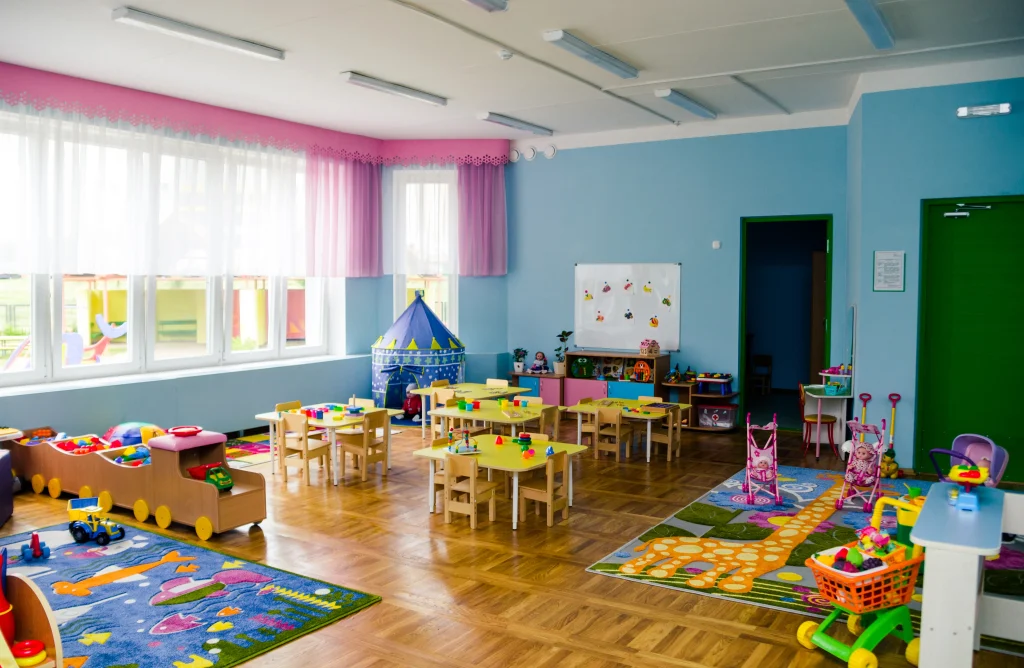
When visiting a preschool, observe the atmosphere. Are teachers speaking respectfully to children? Do children have opportunities to move, create, ask questions, and play? Are routines calm and clear? Do educators seem to know the children as individuals?
Parents can also ask:
- How do teachers help children settle during the first few weeks?
- What does a typical day look like?
- How much time is dedicated to play, outdoor learning, stories, and group activities?
- How are social conflicts handled?
- How does the school communicate with families?
- What happens when a child struggles with separation or routine changes?
- How are children encouraged without being pressured?
Singapore parents can use the LifeSG preschool search service to compare centres by location, vacancies, and other practical needs before contacting shortlisted schools directly.
When Preschool May Need a Different Approach
Preschool is valuable for many children. However, there may be times when a child needs a more gradual transition or additional support.
For example, a child who becomes extremely distressed every day, has persistent difficulties communicating needs, or struggles significantly across multiple settings may benefit from further guidance from a paediatrician, early childhood professional, or child-development specialist.
This is not about labelling a child. It is about understanding what support will help them feel more secure and able to participate.
Likewise, parents should not assume that more hours, more classes, or more academic activity always lead to better outcomes. A child needs enough sleep, free play, family connection, and downtime too.
Balance is not a lack of ambition. It is part of healthy development.
A Strong Start Is About Belonging, Not Being Ahead
Preschool should not be treated as a competition.
Children do not all speak, socialise, separate from parents, or learn new routines at the same pace. One child may love meeting new friends. Another may take weeks to observe quietly before joining in. Both can be learning.
The purpose of preschool is not to make every child “ahead.” It is to provide meaningful experiences that help them become more confident, curious, caring, and ready to learn.
When parents choose a preschool based on warmth, quality, developmentally appropriate learning, and family fit, children are more likely to see school as a place where they belong.
Preschool Is a Foundation, Not a Finish Line
So, why do we need preschool?
For many children, preschool provides a valuable space to play, communicate, build friendships, practise independence, and develop confidence outside home. It can introduce routines and learning experiences that make future school transitions feel less unfamiliar.
However, preschool is most beneficial when it is high quality, child-centred, and suited to the child’s needs. It should work alongside family life—not replace it or create unnecessary pressure.
The right preschool does not need to turn children into early achievers. Instead, it should help them become joyful learners who feel safe enough to try, make mistakes, ask questions, and grow.