
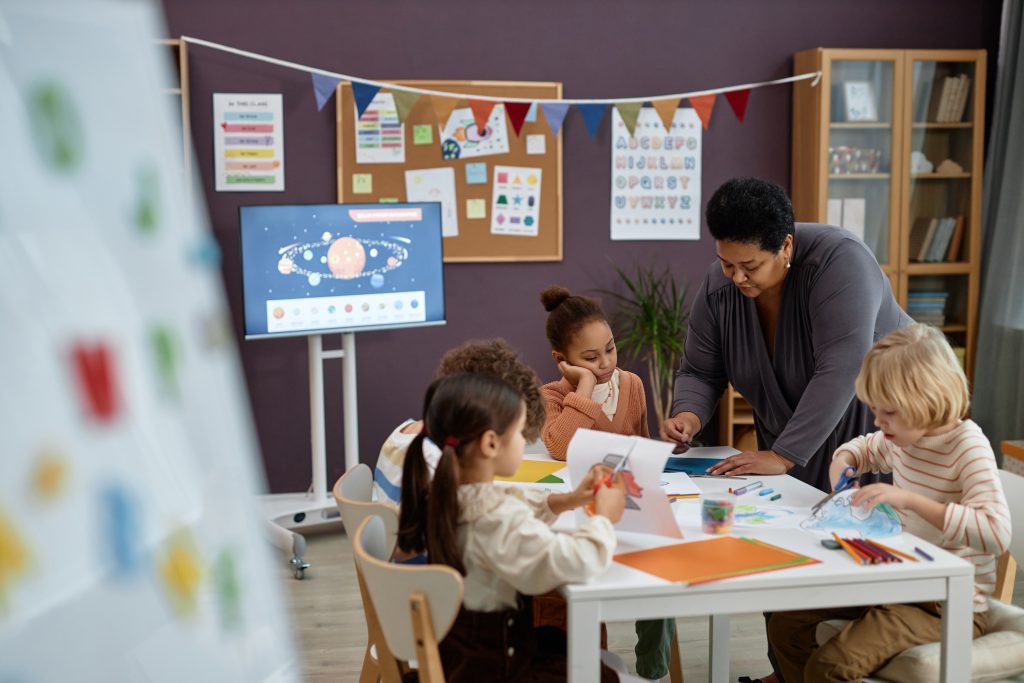
Children learn in many ways. They learn through school, family routines, play, friendships, stories, movement, music, art, problem-solving, and everyday conversations. Because of this, many parents look for enrichment classes that can support their child’s development beyond regular classroom learning.
However, enrichment classes are not only about keeping children busy after school or helping them become “advanced” faster. When chosen well, enrichment programmes can help children build confidence, creativity, social skills, emotional regulation, curiosity, focus, communication, and independence.
The best enrichment classes do not pressure children to perform perfectly. Instead, they give children meaningful opportunities to explore, practise, create, ask questions, make mistakes, try again, and interact with others in a supportive environment.
Research on early learning consistently shows that children’s development is shaped by both cognitive and social-emotional experiences. The OECD’s International Early Learning and Child Well-being Study measures areas such as emergent literacy, emergent numeracy, executive function, and social-emotional development, showing that early learning is not only academic but also deeply connected to well-being and broader skills.
Therefore, the real value of enrichment classes is not just what a child produces at the end of a session. It is what the child practises during the process: thinking, expressing, listening, moving, collaborating, focusing, adapting, and growing.
Understanding Enrichment Classes in Child Development
Enrichment classes are structured learning activities that support children’s growth outside or alongside regular school learning. They may include art, music, dance, sports, coding, robotics, storytelling, drama, language, science, sensory play, public speaking, creative writing, or social-emotional learning.
A good enrichment class should not simply repeat school worksheets. Instead, it should add meaningful experiences that help children develop skills through hands-on exploration, guided play, creative expression, and social interaction.
For preschool and young children, enrichment is most effective when it respects how children naturally learn. Young children do not learn best through long lectures. They learn through doing, seeing, touching, moving, talking, imagining, experimenting, and interacting.
The Encyclopedia on Early Childhood Development describes play-based learning as a pedagogical approach that uses play to promote multiple areas of children’s development and learning. It also distinguishes free play from guided play, both of which can support different parts of children’s growth.
This is why parents should look beyond the name of the class. A “good” enrichment class is not automatically the one with the most difficult content. It is the one that matches the child’s age, interest, confidence level, and developmental needs.
Benefits of Enrichment Classes for Whole-Child Learning
One of the most important benefits of enrichment classes is that they support the whole child. Children are not only developing academic skills. They are also developing self-confidence, emotional awareness, communication, creativity, body coordination, attention, and social understanding.
In fact, early learning research increasingly emphasizes the importance of balanced development. OECD reports on early learning and child well-being highlight that children’s early skills are shaped by learning experiences and well-being, and that countries use this data to understand factors that promote or hinder early learning.
A strong enrichment class can support several developmental areas at once. For example, an art class may build fine motor skills, creativity, emotional expression, vocabulary, and focus. A music class may support rhythm, listening, memory, movement, and social participation. A science class may build curiosity, observation, questioning, and problem-solving.
In other words, enrichment is not only about “extra lessons.” It can become an important part of a child’s developmental ecosystem.
Building Confidence Through New Experiences
Children build confidence when they try something new and discover that they can improve. Enrichment classes create a safe space for this kind of growth.
A child may start an art class unsure of what to draw. Over time, they learn to choose colours, explain their work, and feel proud of their ideas. Another child may be shy during group activities but gradually learns to participate, answer questions, or perform a small role in class.
Confidence does not grow from constant praise alone. It grows from real experiences of effort, progress, and encouragement. When children learn that mistakes are part of learning, they become more willing to try again.
How Enrichment Classes Support Self-Belief
Children may build confidence when they:
- Complete a creative project
- Learn a new movement or skill
- Speak in front of a small group
- Solve a problem independently
- Receive constructive encouragement
- Try again after making a mistake
- See their own progress over time
This is especially important for children who may not always shine in traditional academic settings. Enrichment classes can reveal strengths that may not appear in regular classroom work, such as imagination, rhythm, empathy, storytelling, spatial thinking, leadership, or hands-on creativity.
Improving Social Skills and Peer Interaction
Enrichment classes often place children in small group settings where they practise social skills naturally. They may need to share materials, take turns, listen to instructions, work with a partner, ask for help, or encourage a friend.
These moments may seem simple, but they are powerful. Social skills are not learned only through explanation. Children need repeated opportunities to practise them in real situations.
A 2025 umbrella review on after-school organized activities notes that these activities are valued for their potential to reduce educational disparities and foster positive behavioural outcomes. The review focuses on after-school programmes, extracurricular activities, social-emotional learning, and broad development in school-aged children.
For younger children, the social benefit may appear in small ways: waiting for a turn to use paint, joining a circle-time activity, listening to another child’s idea, or saying “Can I try?” instead of grabbing.
Social Skills Children May Practise
Enrichment classes may help children practise:
- Turn-taking
- Sharing
- Listening
- Asking questions
- Following group routines
- Respecting others’ space
- Working with peers
- Handling small conflicts
- Expressing ideas clearly
- Celebrating others’ efforts
These skills support not only enrichment participation but also preschool readiness, friendships, and future classroom learning.
Supporting Emotional Growth and Self-Regulation
Children need help understanding and managing emotions. Enrichment classes can support emotional development when teachers create a safe, structured, and encouraging environment.
For example, a child may feel frustrated when a puzzle is difficult, disappointed when a drawing does not turn out as expected, or nervous about speaking in front of others. With gentle support, these moments become opportunities to practise self-regulation.
Social and emotional learning research also shows meaningful benefits. Yale School of Medicine reported on research published in Child Development confirming that students who participated in SEL programmes improved academically and socially, with gains in school functioning, attendance, engagement, social-emotional skills, attitudes, behaviours, self-esteem, perseverance, and optimism.
Although SEL programmes are not the same as every enrichment class, the finding is relevant because many high-quality enrichment settings naturally include SEL elements: cooperation, confidence, emotional language, persistence, and positive relationships.
Emotional Skills Children Can Develop
A good enrichment class may help children:
- Manage frustration
- Wait patiently
- Try again after mistakes
- Ask for help
- Accept feedback
- Express feelings through words, art, music, or movement
- Handle transitions
- Build resilience
The key is not to remove every challenge. Children grow when challenges are manageable and adults guide them with warmth.
Strengthening Creativity and Imagination
Creativity is not only useful for art. Creative thinking helps children solve problems, tell stories, build ideas, imagine alternatives, and adapt when something does not go as planned.
Creative enrichment classes can include art, drama, music, dance, storytelling, building, design, and open-ended projects. These activities give children room to make choices and express themselves.
A 2024 comprehensive review on developing creative thinking in preschool children states that creative thinking plays a vital role in preschool development and reviews innovative approaches and strategies used in educational settings.
This matters because modern learning is not only about memorizing facts. Children also need to think flexibly. They need to ask, “What else could I try?” “How can I solve this?” and “What can I create?”
Why Creative Enrichment Matters
Creative enrichment can help children:
- Explore ideas freely
- Develop original thinking
- Express feelings safely
- Make decisions
- Build problem-solving habits
- Practise flexible thinking
- Develop confidence in their own voice
Parents should look for enrichment classes that allow some open-ended exploration. If every child must produce the exact same result, there may be fewer opportunities for genuine creativity.
Developing Focus, Memory, and Executive Function
Many enrichment classes support executive function skills. These are the mental skills children use to focus attention, remember instructions, control impulses, shift between tasks, and complete activities.
Executive function is important for learning and behaviour. A child uses it when following a dance sequence, remembering the steps of an experiment, waiting for their turn in a game, or completing a craft project.
Harvard’s Center on the Developing Child explains that executive function and self-regulation skills help people manage information, make decisions, plan, focus attention, and switch gears. These skills develop through supportive environments where children learn and play.
Enrichment classes can provide this kind of environment when activities are structured but engaging. Children practise attention and self-control without feeling like they are simply being told to “sit still.”
Examples of Executive Function in Enrichment
Children may practise executive function when they:
- Follow a sequence of steps
- Remember game rules
- Wait before responding
- Shift from one activity to another
- Plan a creative project
- Solve a puzzle
- Listen carefully to instructions
- Control body movement during dance or sports
- Complete a task before moving on
These skills support both school readiness and daily life.
Encouraging Curiosity and Love for Learning
Children are naturally curious. They want to know how things work, what happens if they mix colours, why objects float, how music changes mood, or how stories can become performances. Enrichment classes can protect and grow this curiosity.
A well-designed enrichment class does not only give answers. It encourages children to ask better questions.
For example:
- “What do you think will happen?”
- “How can we make this stronger?”
- “Why did the colour change?”
- “What other way can we try?”
- “How does this music make you feel?”
This question-based approach helps children become active learners, not passive receivers of information.
The OECD’s early learning work also emphasizes understanding children’s early skills in relation to learning experiences and well-being, which supports the idea that learning environments should nurture both skills and engagement.
When enrichment classes make learning enjoyable, children may become more motivated to explore topics outside class as well.
Building Communication and Language Skills
Many enrichment classes help children communicate. This may happen through storytelling, drama, group discussion, music, show-and-tell, science explanation, or collaborative projects.
Language grows when children have meaningful reasons to speak. In enrichment classes, children may need to describe their artwork, explain how they built something, ask a teacher for help, share an idea with a friend, or talk about what they discovered.
Language Skills Supported by Enrichment
Children may practise:
- Naming objects, actions, colours, and concepts
- Explaining ideas
- Asking questions
- Listening to instructions
- Retelling what happened
- Using emotional vocabulary
- Speaking in front of others
- Joining peer conversations
For children who are shy or still developing language confidence, enrichment classes can provide gentle practice in a structured environment. However, the class should not pressure children harshly. A supportive teacher can encourage participation gradually.
Supporting Physical Development and Coordination
Some enrichment classes focus on movement, such as dance, gymnastics, sports, yoga, martial arts, or music-and-movement programmes. These activities support gross motor skills, balance, coordination, body awareness, strength, and rhythm.
Other classes, such as art, craft, building, robotics, or sensory play, support fine motor development. Children use small hand muscles when they cut, glue, draw, paint, thread, build, or manipulate objects.
Physical development is closely connected to confidence. A child who can balance, jump, hold tools, or control hand movements often becomes more independent in daily routines.
A 2025 review on physical activity programmes notes that executive functions are core cognitive processes supporting self-regulation, learning, and behavioural flexibility in childhood.
This connection between movement and self-regulation is one reason active enrichment classes can be valuable, especially for children who need more opportunities to move while learning.
Helping Children Discover Interests and Strengths
One benefit of enrichment classes is exposure. Children may not know they enjoy music, robotics, drama, cooking, painting, sports, or storytelling until they try.
Early exposure does not mean forcing children into a fixed path. Instead, it gives them chances to discover what excites them.
A child who struggles with worksheets may shine in hands-on science. A quiet child may express themselves through art. A highly energetic child may thrive in movement-based learning. A detail-oriented child may enjoy puzzles, building, or coding.
Why Discovery Matters
When children explore different activities, they may:
- Learn what they enjoy
- Build identity and self-awareness
- Discover hidden strengths
- Develop hobbies
- Meet peers with similar interests
- Gain motivation to practise
- Build confidence outside academics
This can be especially meaningful for children who need more than one type of learning environment to feel successful.
Creating Healthy Structure Beyond School
Children benefit from rhythm and structure. Enrichment classes can create predictable learning moments outside regular school time. For some children, this routine supports responsibility and time management.
However, parents should be careful not to overload children. Too many classes can lead to stress, fatigue, and reduced free play. The best schedule leaves room for rest, family time, outdoor play, and unstructured creativity.
Enrichment should support childhood, not replace it.
Signs a Child’s Enrichment Schedule Is Healthy
A balanced enrichment routine usually means the child:
- Looks forward to class most of the time
- Has enough sleep and rest
- Still has free play
- Can manage school and family routines
- Shows interest or gradual engagement
- Does not seem constantly tired or anxious
- Has time for social and family connection
If a child resists every class, becomes exhausted, or loses interest in play, parents may need to reduce the schedule or choose a better-fitting activity.
What Makes a Good Enrichment Class?
Not every enrichment class offers the same value. Parents should look for quality, not just popularity.
A good enrichment class should be developmentally appropriate, safe, engaging, and supportive. It should match the child’s age and learning style. It should also give children room to participate actively, not just sit and listen.
Qualities Parents Should Look For
A strong enrichment class often includes:
- Age-appropriate activities
- Clear but gentle structure
- Warm and responsive teachers
- Safe learning environment
- Small enough group size for attention
- Hands-on participation
- Balance between guidance and creativity
- Opportunities for communication
- Positive feedback and encouragement
- Respect for different learning speeds
Parents can also ask how progress is observed. Good programmes should be able to explain not only what children do, but also what skills they are developing.
How Parents Can Choose the Right Enrichment Class
Choosing the right enrichment class depends on the child. A class that works for one child may not work for another.
Before enrolling, parents can consider:
- What does my child naturally enjoy?
- Does my child need more confidence, movement, creativity, or social practice?
- Is the class age-appropriate?
- Is the teacher patient and encouraging?
- Is the environment too competitive or too rigid?
- Does the class allow children to explore?
- Will the schedule still leave time for rest and play?
It is also helpful to observe the child after class. Do they seem energized, proud, curious, or calmer? Or do they seem consistently stressed and drained? A child’s response can tell parents a lot.
Common Misconceptions About Enrichment Classes
“Enrichment Is Only for Academic Achievement”
Academic enrichment can be helpful, but enrichment is broader than academics. Art, music, sports, drama, movement, and social-emotional programmes can be just as valuable for development.
“The Hardest Class Is the Best Class”
A class that is too advanced may create anxiety instead of growth. The best class is challenging enough to encourage progress but supportive enough to keep the child engaged.
“Children Must Produce Visible Results Every Session”
Some of the most important benefits are not immediately visible. Confidence, focus, communication, creativity, and resilience develop gradually.
“More Classes Mean Better Development”
Children also need rest, family connection, and free play. Enrichment should be balanced, not excessive.
Enrichment Classes Can Help Children Grow With Confidence
The benefits of enrichment classes go far beyond extra learning. A well-designed enrichment programme can help children build confidence, creativity, social skills, emotional regulation, communication, focus, curiosity, and independence.
Most importantly, enrichment classes can give children meaningful experiences that support whole-child development. They allow children to explore who they are, what they enjoy, and how they learn best.
For parents, the goal is not to fill every free hour with structured activities. The goal is to choose enrichment experiences that match the child’s needs, support healthy growth, and make learning feel joyful. When enrichment is balanced, age-appropriate, and guided by caring adults, it can become a powerful part of a child’s developmental journey.