
Preschoolers are naturally curious. They ask questions, repeat songs, remember favourite stories, recognize routines, and surprise parents with details from days or even weeks ago. At the same time, they may forget where they placed a toy, struggle to follow multi-step instructions, or lose focus halfway through a task.
This is normal. Memory is still developing during the preschool years, especially the kind of memory children use to follow directions, play games, solve problems, and stay focused. That is why memory games for preschoolers can be so helpful. They turn brain-building into something children already love: play.
Memory games are not only about remembering cards or repeating words. They can include movement, songs, storytelling, pretend play, matching, sequencing, visual recall, listening games, and simple turn-taking activities. When chosen well, these games support working memory, attention, language, self-control, and social confidence.
Harvard’s Center on the Developing Child explains that children can strengthen executive function skills through games and playful activities, including the ability to focus attention, build working memory, and develop basic self-control.
In other words, memory games are not just “fun extras.” They can become part of a child’s early learning foundation when they are playful, age-appropriate, and supported by warm adult interaction.
Why Memory Matters in Preschool Development
Memory helps preschoolers make sense of the world. A child uses memory when they remember a song lyric, retell part of a story, follow “wash your hands, then sit down,” recognize a classmate’s name, or recall where the puzzle pieces go.
However, memory is not one single skill. For young children, one of the most important types is working memory. Working memory allows children to hold information in mind and use it. For example, when a parent says, “Put your shoes by the door and bring your water bottle,” the child needs to remember both steps long enough to act on them.
NAEYC explains that executive function skills include processes such as attention, impulse control, and memory, and that playful learning can support these skills in early childhood settings.
This is why memory games should not feel like academic drills. Preschoolers learn best when memory is connected to action, story, emotion, rhythm, and play.
Memory Games for Preschoolers and Executive Function Skills
Memory games are closely connected to executive function. Executive function is the set of mental skills children use to pay attention, remember instructions, control impulses, shift between tasks, and solve problems.
NAEYC highlights that games are a type of playful learning experience that can be planned and guided by teachers, and once children learn a game, they can often play it independently while adults observe executive function skills in action.
For preschoolers, this matters because games create natural reasons to practise. A child playing “Simon Says” has to listen, remember the rule, stop impulsive movement, and act only at the right time. A child playing a matching card game has to remember where pictures are, wait for a turn, and handle the disappointment of not finding a match.
Therefore, memory games do more than train recall. They help children practise the mental habits needed for preschool readiness and everyday life.
The Developmental Benefits of Memory Games
Memory games can support several areas of child development at once. This is why they are valuable for parents, preschool teachers, and enrichment class settings.
Stronger Attention and Focus
Many memory games require children to look carefully, listen closely, or stay engaged until their turn comes. Over time, this can help children practise sustained attention.
For example, in a simple “What’s Missing?” game, a child looks at five objects, closes their eyes, and then identifies which object was removed. The child must observe, remember, and compare. These small mental steps build focus in a playful way.
Better Language and Vocabulary
Memory games can also strengthen language. When children name objects, describe pictures, repeat phrases, retell stories, or follow verbal clues, they are using both memory and communication.
For example, a parent might say, “I’m thinking of an animal that is big, grey, and has a trunk.” The child must remember the clues and connect them to prior knowledge. NAEYC gives examples of word and rhyming games that ask children to listen, focus, think flexibly, and use what they already know to generate ideas.
Improved Self-Control
Games naturally involve waiting, taking turns, following rules, and stopping when needed. These moments help children practise self-control without feeling like they are being lectured.
Harvard’s executive function activity guide for ages 3 to 5 explains that songs and movement games support executive function because children must move to a rhythm and synchronize words with actions, which contributes to inhibitory control and working memory.
More Confidence and Persistence
When children remember something successfully, they feel proud. When they forget, they get a chance to try again. This helps children build persistence.
A good memory game should not make a child feel tested or embarrassed. Instead, it should feel like a challenge they can grow into. When adults celebrate effort—“You remembered two pictures this time!”—children become more willing to try again.
Best Memory Games for Preschoolers at Home
Parents do not need expensive materials to play memory games. Many of the best activities use everyday objects, songs, movement, books, and simple cards.
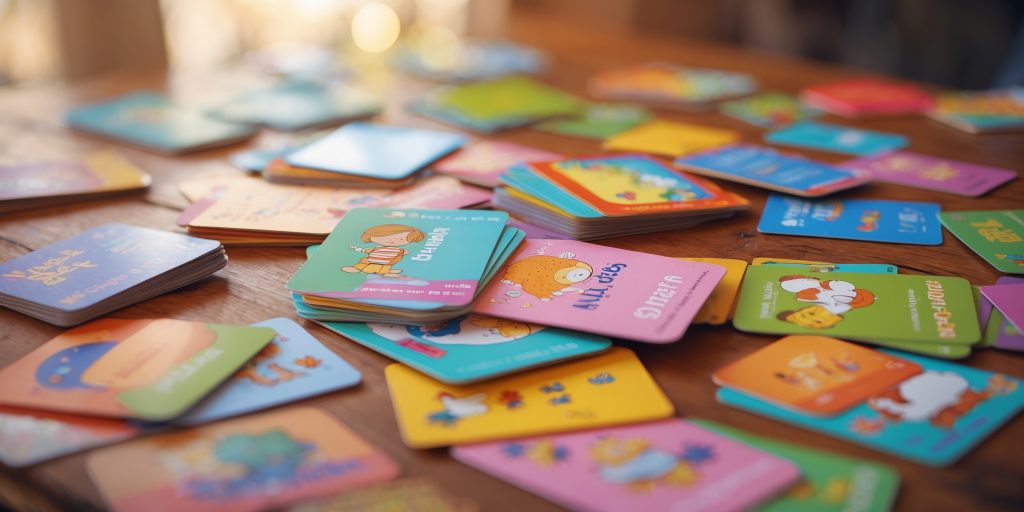
1. Matching Card Game
This classic game helps children practise visual memory and turn-taking.
Place a few pairs of picture cards face down. Start with three or four pairs, not too many. Children take turns flipping two cards. If they match, the child keeps the pair. If not, the cards are turned back over.
To make it easier, use familiar images such as animals, fruits, vehicles, colours, or shapes. To make it harder, add more pairs.
This game supports:
- Visual recall
- Attention
- Turn-taking
- Patience
- Vocabulary
For preschoolers, the goal is not to win quickly. The goal is to practise remembering locations and staying engaged.
2. What’s Missing?
Choose four or five objects and place them on a tray. Let the child look carefully. Then ask the child to close their eyes while you remove one object. When they open their eyes, ask, “What’s missing?”
You can use toys, spoons, crayons, blocks, fruit, or household items.
To support language, ask follow-up questions:
- “What colour was it?”
- “Where was it before?”
- “What do we use it for?”
This game is simple, but it builds observation, memory, and descriptive language.
3. Story Recall Game
Read a short picture book together. After reading, ask simple questions:
- “Who was in the story?”
- “Where did they go?”
- “What happened first?”
- “What happened at the end?”
- “Which part did you like?”
CDC milestone guidance notes that by preschool age, children’s play, learning, speech, behaviour, and movement offer important clues about development, and five-year milestones include increasing abilities in language, thinking, and storytelling-related skills.
Story recall is especially useful because it connects memory with comprehension, sequencing, vocabulary, and emotional understanding.
4. Simon Says
“Simon Says” is a movement-based memory game. Children must remember the rule: only do the action if the phrase begins with “Simon says.”
For example:
“Simon says touch your nose.”
“Simon says jump twice.”
“Clap your hands.”
If “Simon says” was not used, the child should not act.
This game supports listening, working memory, inhibition, and body control. It is also easy to adjust. For younger preschoolers, keep actions simple. For older preschoolers, add two-step actions such as “Simon says touch your head and turn around.”
5. Memory Dance
Create a short movement pattern:
Clap, stomp, spin.
Jump, touch knees, clap.
Wave, tap shoulders, freeze.
Ask the child to copy the sequence. Then add one more movement.
Harvard’s resources on brain-building through play emphasize that playful activities can strengthen working memory, attention, and self-control.
Memory dance is especially helpful for active children because it allows them to move while practising recall.
6. Sound Memory Game
Make a series of sounds using hands, objects, or instruments. For example:
Clap, clap, tap.
Shake, tap, clap.
Stomp, clap, snap.
Ask the child to repeat the pattern. You can also hide objects behind a cloth and make a sound, then ask the child to guess what made it.
This game supports auditory memory, listening skills, rhythm, and attention.
7. Shopping List Game
Pretend to go shopping. Start with one item:
“I went to the shop and bought apples.”
The next person repeats the first item and adds another:
“I went to the shop and bought apples and milk.”
Continue adding items as long as the child enjoys it.
For younger preschoolers, use real toy food or picture cards. For older preschoolers, try without visual support.
This game builds verbal memory, vocabulary, sequencing, and flexible thinking.
8. Treasure Hunt With Clues
Hide a toy and give simple clues:
“First go to the sofa. Then look under the pillow.”
For younger children, give one-step clues. For older preschoolers, use two-step or three-step directions.
This activity helps children practise following instructions, remembering sequences, and solving problems.
9. Picture Observation Game
Show a picture for 20 to 30 seconds. Then cover it and ask:
- “What animals did you see?”
- “Was there a tree?”
- “What colour was the house?”
- “How many children were there?”
This game supports visual memory, attention to detail, and language. It can be played with picture books, flashcards, family photos, or drawings.
10. Pretend Play Memory Challenge
Pretend play can also strengthen memory. For example, when playing “restaurant,” ask the child to remember an order:
“I would like soup and orange juice, please.”
Later, make it more complex:
“I would like noodles, water, and a red apple.”
Harvard’s executive function activity guide notes that intentional imaginary play helps children hold complex ideas in mind, follow role-based rules, and inhibit actions that do not fit the role.
This makes pretend play one of the most natural memory-building activities for preschoolers.
How to Choose Age-Appropriate Memory Activities
Not every memory game fits every preschooler. A three-year-old may enjoy matching two pairs of cards, while a five-year-old may enjoy remembering longer sequences or playing more structured games.
CDC guidance for preschoolers explains that children from 3 to 5 become more independent, focus more on adults and children outside the family, explore more, ask about things around them, play with other children, recall part of a story, and sing songs.
This means memory games should match the child’s developmental stage, not just their age.
For Younger Preschoolers
Choose games with:
- Fewer objects or cards
- More visual support
- Simple rules
- Short turns
- Movement and songs
- Familiar words and objects
Good options include “What’s Missing?”, simple matching cards, action songs, and picture recall.
For Older Preschoolers
Choose games with:
- More steps
- Longer sequences
- Simple strategy
- Turn-taking
- Story recall
- Pretend play rules
- Word clues or rhyming clues
Good options include shopping list games, treasure hunts, Simon Says, story sequencing, and more complex matching games.
How Parents Can Make Memory Games More Effective
Memory games work best when children feel relaxed and engaged. If a child feels pressured, they may resist or lose interest. Therefore, the way adults guide the game matters.
Start Small
Begin with a challenge your child can almost do. If it is too easy, they may get bored. If it is too hard, they may give up.
For example, start with three objects in “What’s Missing?” before using six. Start with two-step movement patterns before adding four steps.
Repeat Often
Children learn through repetition. Playing the same memory game multiple times is not a problem. In fact, repetition helps children feel confident and ready for harder versions.
Use Encouraging Language
Instead of saying, “No, that’s wrong,” try:
“Good try. Let’s look again.”
“You remembered the red car. What else was there?”
“That was tricky. Let’s try with fewer cards.”
“You focused carefully that time.”
This supports confidence and persistence.
Follow the Child’s Interest
If your child loves animals, use animal cards. If they love vehicles, use cars and buses. If they enjoy movement, choose active memory games.
Interest increases attention, and attention supports memory.
Keep Sessions Short
Preschoolers do not need long practice sessions. Five to ten minutes can be enough. It is better to play briefly and happily than to continue until the child becomes tired or frustrated.
Memory Games in Preschool and Enrichment Classes
Memory games are also valuable in preschool and enrichment settings. In a group environment, children practise not only memory but also listening, turn-taking, social interaction, and emotional regulation.
A good enrichment class may use:
- Music and rhythm games
- Story sequencing
- Movement patterns
- Visual matching
- Language-based guessing games
- Group treasure hunts
- Pretend play roles
- Art-based memory activities
NAEYC describes games as playful learning experiences that can help teachers observe and assess children’s executive function skills once children understand how to play.
This is important because a high-quality preschool or enrichment environment should not rely only on worksheets. Children need hands-on, playful, social, and meaningful ways to practise thinking skills.
Signs Memory Games Are Helping Your Child
Parents may notice progress gradually. A child may begin remembering longer instructions, retelling more details from stories, waiting better during games, or staying engaged for longer periods.
Positive signs include:
- Remembering simple routines
- Following two-step directions
- Retelling parts of a story
- Recognizing patterns
- Naming missing objects
- Waiting for turns
- Copying longer movement sequences
- Showing more confidence during games
- Using more descriptive language
- Trying again after forgetting
However, progress is not always linear. Some days a child may focus well, while other days they may be tired or distracted. This is normal.
When Parents Should Pay Closer Attention
Memory challenges can be part of normal preschool development. Still, parents may want to seek guidance if a child consistently struggles with everyday memory and attention in a way that affects daily life.
For example, consider speaking with a paediatrician, early childhood educator, or child development professional if a child:
- Cannot follow simple familiar directions
- Seems unable to remember routines after many repetitions
- Has difficulty understanding stories or simple questions
- Struggles significantly with attention across settings
- Loses previously learned skills
- Shows delays in language, social interaction, or play
- Becomes extremely frustrated with simple learning activities
The CDC emphasizes that developmental milestones help parents notice how children play, learn, speak, act, and move, but they are not a substitute for standardized developmental screening tools.
Seeking guidance does not mean something is “wrong.” It simply helps parents understand whether a child needs more support.
Memory Grows Best Through Play
Memory games for preschoolers are powerful because they make learning feel natural. Through matching cards, story recall, movement patterns, songs, pretend play, treasure hunts, and guessing games, children practise working memory, attention, language, self-control, and confidence.
The best memory games are simple, playful, and connected to the child’s interests. They do not need to feel like tests. In fact, preschoolers often learn more when they are laughing, moving, imagining, and interacting with caring adults.
For parents, the goal is not to make children memorize perfectly. The goal is to help them build thinking habits: noticing, listening, remembering, trying again, and enjoying the process of learning. When memory games are used with patience and warmth, they become more than activities. They become small daily moments that support a child’s growing brain, confidence, and love for learning.